


Current location:HOME > PRODUCT > photovoltaic cable >
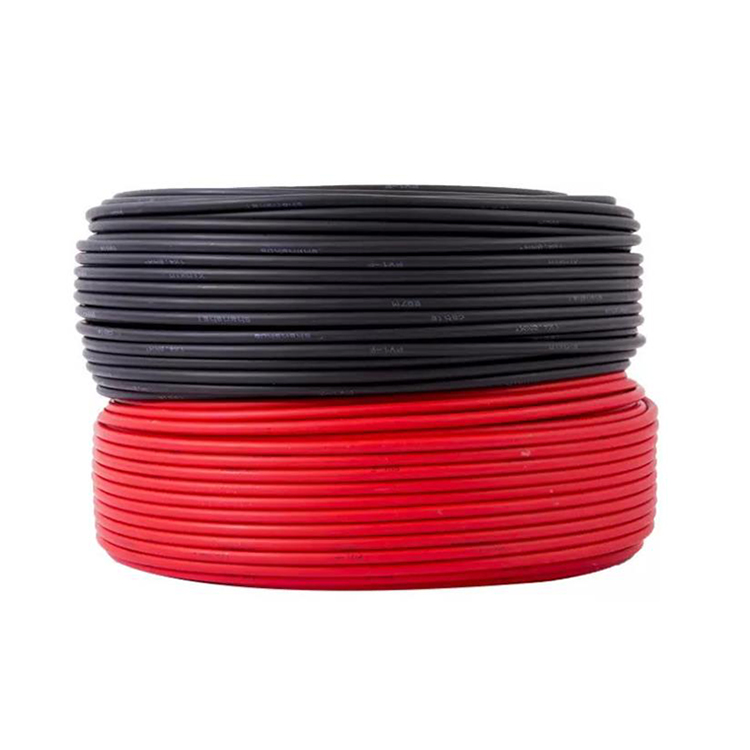
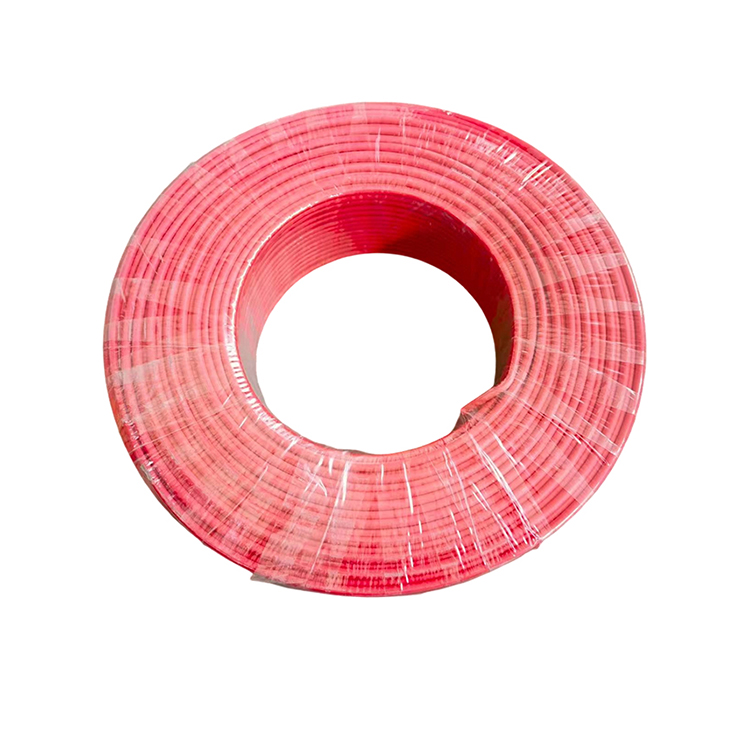
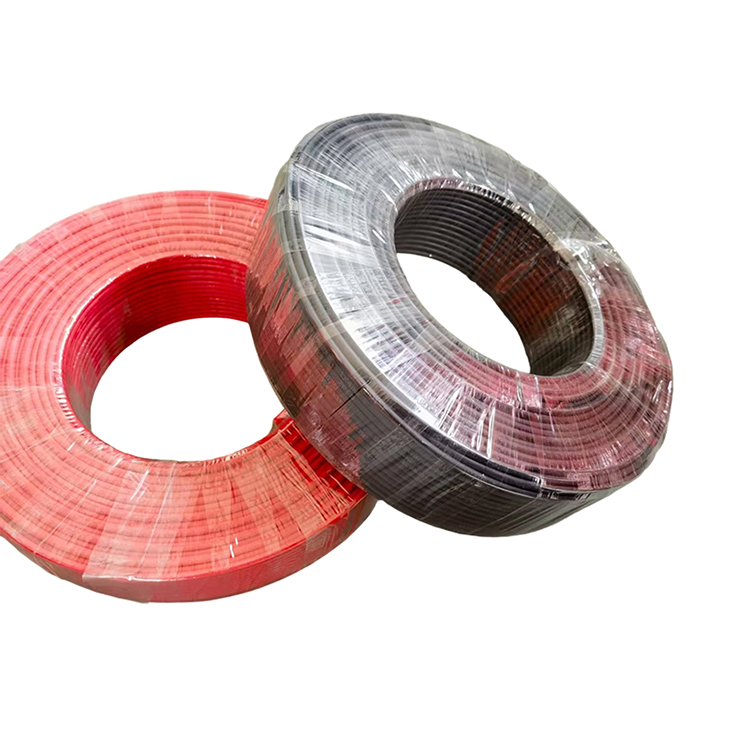
The 2 × 6 square photovoltaic cable is a core transmission cable designed specifically for photovoltaic new energy systems. It adopts a two core symmetrical structure, with a single core conductor cross-sectional area of 6mm ², and is suitable for power transmission needs between key equipment such as photovoltaic modules, inverters, and combiner boxes. The product focuses on stable operation in harsh outdoor environments, with excellent weather resistance, temperature resistance, aging resistance, and low loss characteristics. It is an ideal transmission solution for distributed photovoltaic power stations, centralized photovoltaic projects, industrial and commercial rooftop photovoltaic systems, and can effectively protect the long-term stable power generation of photovoltaic systems.
Core performance advantages
Effective conductive low loss transmission
The conductor is made of high-purity oxygen free copper material, which is finely drawn and twisted, and has excellent conductivity with a resistivity far below industry standards. The cross-sectional specification of 2 × 6mm ² can effectively reduce line loss during current transmission, minimize power waste, and ensure that the electricity generated by photovoltaic modules is effectively transmitted to energy storage or grid connected equipment, thereby improving the power generation efficiency and revenue of the entire photovoltaic system.
Weather resistance and aging resistance suitable for outdoor scenes
The insulation layer and sheath of the cable are made of excellent irradiated cross-linked polyolefin materials, which have undergone special irradiation cross-linking processes and have strong resistance to ultraviolet radiation, ozone, and high and low temperatures. It can work stably in extreme temperature environments ranging from -40 ℃ to 90 ℃, with excellent resistance to long-term outdoor sun exposure, rain, sandstorms, day night temperature differences, and other harsh conditions. Its service life far exceeds that of ordinary cables, meeting the long-term operation needs of photovoltaic systems for more than 25 years.
Good performance, excellent protection performance
The product strictly follows the industry standards related to photovoltaic cables and has good flame retardant performance (complying with UL94 V-0 level or GB/T 18380 flame retardant standards). It is not easy to burn when exposed to fire and has low smoke toxicity, which can effectively prevent fire hazards. At the same time, the sheath layer has good mechanical strength, wear resistance (based on actual reports), tear resistance, and chemical corrosion resistance (can resist acidic and alkaline substances in soil, chemical media around photovoltaic panels, etc.), and is not easily damaged during installation and long-term use, protecting the continuity and safety of power transmission.
Flexible and easy to lay, suitable for complex scenarios
The cable adopts a flexible structure design, with twisted conductors paired with soft insulation sheaths, resulting in excellent bending performance of the cable. The small bending radius is much lower than that of ordinary hard cables. It can easily adapt to various complex installation environments such as roofs, brackets, and floors of photovoltaic power plants. Whether it is through pipes, direct burial, overhead, or along brackets, it can be flexibly operated, reducing construction difficulty and labor costs, and improving construction efficiency.
Applicable scenarios
This product is suitable for various photovoltaic new energy generation scenarios, with core applications including but not limited to: distributed household photovoltaic systems, industrial and commercial rooftop photovoltaic power stations, centralized ground photovoltaic power stations, photovoltaic building integration (BIPV) projects, photovoltaic agricultural greenhouses, photovoltaic energy storage power stations, etc. It can be used for key transmission links such as the connection between photovoltaic module strings, the connection between modules and combiner boxes, and the connection between combiner boxes and inverters, adapting to the configuration requirements of photovoltaic systems with different power levels.
Key technical characteristics
Rated voltage: DC 1.8kV (suitable for high-voltage direct current transmission requirements of photovoltaic systems); Working temperature: The conductor is allowed to work at a temperature of 90 ℃ for a long time, and during a short circuit (up to 5 seconds), the allowable temperature should not exceed 250 ℃; Insulation resistance: ≥ 100M Ω· km (at 20 ℃); Laying method: can be directly buried, threaded, overhead, or laid along the support (outdoor laying does not require additional protection); Execution standards: comply with relevant standards for photovoltaic cables such as IEC 60228, IEC 60502-1, GB/T 12706, etc.
Precautions for use
During the laying process, the cable should be avoided from being squeezed or punctured by sharp objects to prevent damage to the sheath; During installation, it is necessary to confirm that the cable connection is in good contact to avoid local overheating caused by virtual connections; When laying outdoors, direct contact with highly corrosive substances and high-temperature heat sources should be avoided as much as possible; Cable cutting and connection must be operated by dedicated personnel to confirm that the joint is sealed and waterproof (based on actual reports), has good insulation, and the protection system operates safely.







CONTACT
Email:525860526@qq.com
Whatsapp: +86 19933450664
TEL:+86 17803069333
WEB:https://www.haoshizai-solar.com
ADD:Dongyang Village, Daweihe Hui and Manchu Township, Wenan County, Langfang City, Hebei Province