

Current location: HOME > BLOGS > Frequently Asked Questions >
Future Development of New Energy Vehicle Wiring Harness Technology
time:2026-05-14 08:06:30 author:haoshizai Click:81
As the global automotive industry speeds up its transition toward electrification and intelligence, new energy vehicles (NEVs) are experiencing rapid technological upgrades. Among the core supporting systems, the wiring harness is evolving from a conventional structure for power and signal transmission into a highly integrated, lightweight, and intelligent electrical backbone. For manufacturers, engineers, and industry insiders who aim to maintain a competitive edge in the era of electric mobility, understanding the future development of NEV wiring harness technology is indispensable.

1. Transition to High-Voltage Architectures (800V and Higher)
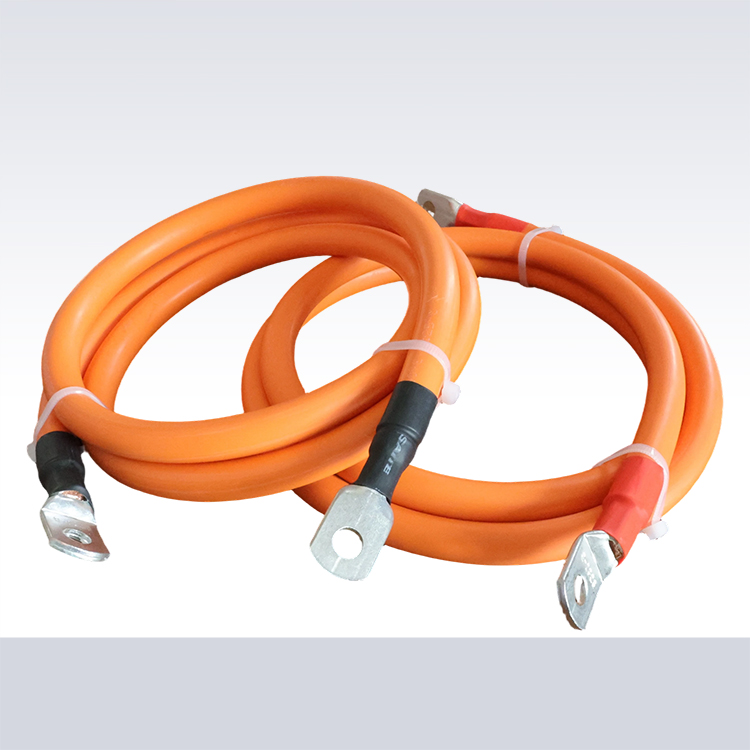
One of the most notable trends in NEV wiring harness technology is the wide adoption of high-voltage platforms, especially 800V systems and those with even higher voltages. In comparison with traditional 400V systems, high-voltage architectures provide several advantages:
Quicker charging speeds
Reduced energy consumption
Enhanced driving efficiency
Nevertheless, this trend also imposes stricter requirements on wiring harness design, such as:
Upgraded insulation materials
Stronger heat resistance capabilities
Higher electrical safety standards
Wiring harness systems in the future will need to be more durable while keeping a compact structure and high reliability.
2. Lightweight Materials to Extend Driving Range
Reducing vehicle weight continues to be a top priority for electric vehicle manufacturers, as it has a direct impact on the driving range of NEVs. Future wiring harness technology will increasingly adopt the following measures:
Aluminum conductors instead of copper in specific applications
Thin-wall insulation materials
Optimized cable routing designs
These improvements help decrease the overall weight of the vehicle without sacrificing performance or safety.
3. Modular and Integrated Harness Systems
Traditional wiring systems are complicated and require significant manual labor. The future of wiring harness design is moving toward modularization, which simplifies both production and maintenance processes. The key advantages of modular harness systems include:
Faster vehicle assembly efficiency
Easier repair and replacement of components
Lower manufacturing costs
Improved standardization across different vehicle platforms
Modular systems also support the development of multi-platform vehicles, making them highly suitable for global EV manufacturers.
4. Intelligent Wiring Harnesses Equipped with Embedded Sensors
One of the most transformative trends in NEV wiring harness technology is the integration of intelligent diagnostic and sensing functions into the harnesses. Future NEV wiring systems may incorporate:
Temperature monitoring sensors
Current and voltage detection modules
Fault diagnosis systems
Real-time communication interfaces
This enables vehicles to detect potential issues at an early stage, thereby enhancing safety and reducing maintenance costs.
5. Growing Adoption of High-Speed Data Transmission
As vehicles become more connected and autonomous, wiring harnesses must be capable of supporting high-speed data communication for various systems, including:
Advanced Driver Assistance Systems (ADAS)
Autonomous driving control units
Vehicle-to-everything (V2X) communication systems
High-resolution infotainment systems
Future harness designs will rely more heavily on high-speed data cables and optimized shielding technologies to ensure stable and interference-free data transmission.
6. Automation in Manufacturing Processes
The production process of wiring harnesses is also undergoing profound changes through the adoption of automation technologies. Future manufacturing trends in this field include:
Robotic wire cutting and crimping
Automated harness assembly lines
AI-based quality inspection systems
Digital design and simulation tools
These technologies improve production precision, reduce human errors, and enhance production efficiency.
7. Enhanced Safety and Thermal Management
With the development of higher-power systems and denser electronic integration, safety has become an even more critical factor in NEV design. Future wiring harness technologies will focus on the following aspects:
Improved flame-retardant materials
Better thermal resistance coatings
Advanced grounding and shielding systems
Multi-layer insulation structures
These enhancements ensure the stable operation of wiring harnesses under extreme working conditions.
8. Sustainability and Eco-Friendly Materials
Sustainability has become a major focus in the automotive manufacturing industry. The future development of wiring harnesses will also emphasize eco-friendliness, including:
Recyclable materials
Reduced use of hazardous substances
Eco-friendly insulation compounds
Energy-efficient production processes
This aligns with global carbon neutrality goals and green manufacturing standards.
9. Digital Twin and Virtual Design Optimization
Digital engineering tools are revolutionizing the design process of wiring harnesses. With digital twin technology, engineers can:
Simulate the electrical performance of harnesses
Optimize cable routing in 3D environments
Predict potential failure points before mass production
Shorten the development cycle
This leads to the development of more reliable and cost-effective wiring harness systems.
Conclusion
The future development of new energy vehicle wiring harness technology is driven by the trends of electrification, intelligence, lightweight design, and sustainability. From high-voltage systems and intelligent diagnostics to modular structures and automated manufacturing, wiring harnesses are evolving into highly advanced systems that support the next generation of electric mobility. As NEVs continue to gain global popularity, innovations in wiring harness technology will remain a key foundation for ensuring vehicle safety, efficiency, and smart performance.
References
GB/T 7714:Review of Current Status and Future Directions for Collaborative and Semi-Automated Automotive Wire Harnesses Assembly
MLA:The Five Transformations and Future Opportunities of the Automotive Wiring Harness Industry in the Electric Vehicle Era
APA:Understanding the Wiring Harnesses and Connectors for Electric Vehicle Market