


Current location: HOME > BLOGS > Frequently Asked Questions >
Top Reliable Solar Cable Manufacturer for Utility-Scale Photovoltaic Projects
time:2026-10-07 10:42:44 author:haoshizai Click:119
A utility-scale solar plant contains tens of thousands of metres of DC cable, buried in duct, clipped to purlins, exposed to UV for twenty-five years and expected to need zero maintenance. Choosing the wrong solar cable manufacturer turns a 25-year asset into a recurring O&M problem - insulation cracking, ground faults, and inverter downtime measured in megawatt-hours.
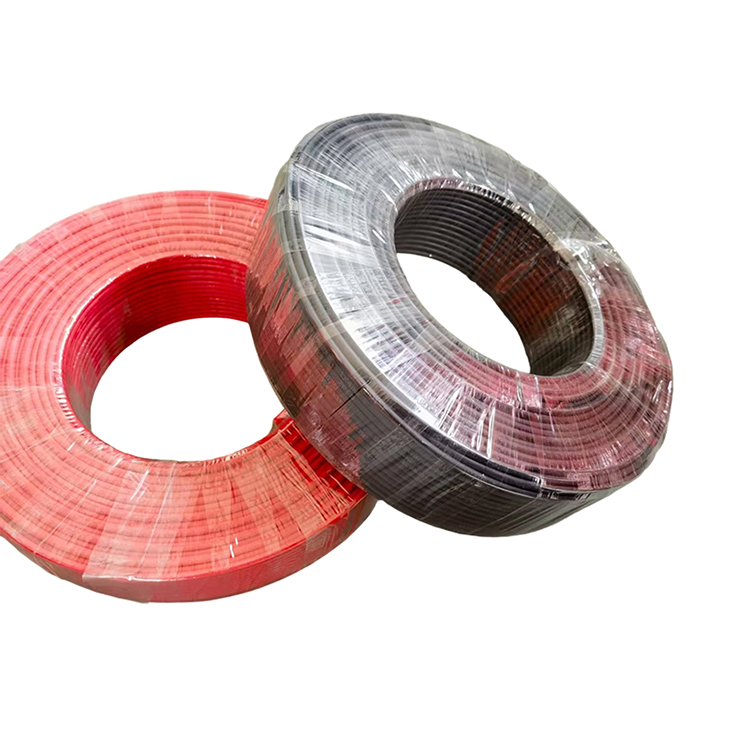
This article sets out the practical criteria professional buyers use when qualifying a photovoltaic cable supplier, from standards compliance and conductor metallurgy to factory audits and delivery reliability, and shows how Hebei Haoshizai Cable Co., Ltd. addresses each one.
The Baseline: Standards a Photovoltaic Cable Must Meet
The international reference for DC solar cable is the H1Z2Z2-K construction defined in EN 50618 and its IEC 62930 counterpart, with UL 4703 covering PV wire in North American markets. These standards fix conductor class, insulation and sheath wall thickness, temperature rating, ozone and UV resistance, and the short-circuit temperature the cable must survive.
Compliance is not a marketing badge - it changes the physical product. A cable built to EN 50618 uses flexible tinned copper Class 5 stranding with electron-beam cross-linked insulation and sheath, which is what allows it to carry 90 °C continuous conductor temperature while remaining flexible at -40 °C. A cable that merely looks similar but uses non-cross-linked PVC will soften, creep and fail long before the asset reaches payback.
EN 50618 / IEC 62930 - H1Z2Z2-K DC solar cable
UL 4703 - PV wire for North American installations
IEC 60228 Class 5 flexible tinned copper conductor
90 °C continuous / 250 °C short-circuit conductor rating
UV, ozone and hydrolysis resistance for 25-year outdoor life
What Professional Buyers Audit in a Solar Cable Factory
Documentation review comes first: type test reports, routine test records, material declarations and traceability between a drum label and the production batch that made it. Without batch traceability, a field problem cannot be contained, and every installed drum becomes suspect.
The physical audit focuses on the extrusion and cross-linking lines, the stranding operation, and the in-house laboratory. Key questions are whether insulation thickness is measured online, whether spark testing is performed on 100 percent of production, and whether the factory can run the thermal ageing and UV tests that predict service life rather than simply measuring dimensions.
Type test reports against EN 50618 / IEC 62930 or UL 4703
Online insulation thickness control and 100 percent spark testing
In-house ageing, UV and tensile testing capability
Batch-to-drum traceability and retained samples
Documented raw material incoming inspection
Conductor Quality: the Hidden Variable in PV Cable Price
Two quotations for the same nominal cross-section can differ by double digits, and most of the gap usually sits in the conductor: copper purity, actual cross-sectional area versus nominal, strand count and whether the strands are tinned. A cable sold at 4 mm² but produced at 3.7 mm² will run hotter, waste energy as voltage drop and quietly erode plant yield for decades.
Hebei Haoshizai Cable Co., Ltd. produces photovoltaic cable in 2.5 mm², 4 mm², 6 mm², 10 mm² and 16 mm² single-core sizes plus 2×6 mm² and 2×10 mm² twin constructions, using flexible tinned copper stranding so that the conductor retains both conductivity and bend performance through installation and thermal cycling.
Tinned copper prevents oxidation at terminals over decades
Class 5 stranding keeps the cable flexible on purlins and in ducts
True-to-nominal cross-section protects against voltage drop losses
Consistent stranding improves crimp and connector reliability
Conductor resistance measured and recorded per batch
Jacket Durability: What Actually Kills Solar Cable in the Field
Field failures rarely start with the copper. They start with the sheath: UV embrittlement on exposed runs at array edges, rodent damage in agricultural projects, abrasion where cable is dragged across mounting structure, and water ingress at poorly made joints in buried duct.
A properly cross-linked halogen-free sheath resists all four. It does not melt and flow at high temperature, it survives decades of UV exposure without chalking, and because it is halogen-free it does not release corrosive acid gas if a fault does occur inside a combiner box or building.
Electron-beam cross-linked sheath for heat and abrasion resistance
UV and ozone stabilised compound for exposed array runs
Halogen-free, low-smoke formulation for enclosed and rooftop zones
Rodent-resistant and double-insulated options for high-risk sites
Colour-coded red and black cores for polarity safety
Capacity, Lead Time and Delivery Reliability
Solar construction schedules are unforgiving. A container that arrives three weeks late can delay energisation and trigger penalty clauses that dwarf the cable cost. Capacity planning and honest lead times are therefore as commercially important as the cable specification itself.
Hebei Haoshizai Cable Co., Ltd. runs standardised production workshops with modern equipment and mature process control, which allows repeat orders to be scheduled predictably and mixed containers - photovoltaic cable together with new energy EV wiring - to be consolidated for export.
Scheduled production slots for repeat and framework orders
Mixed-size containers: 2.5 mm² to 16 mm² plus twin constructions
Export packing, drum marking and documentation support
Consolidation with new energy EV wiring to reduce freight cost
Responsive sample dispatch for approval before bulk production
Building a Long-Term Photovoltaic Cable Supply Relationship
The lowest unit price is rarely the lowest total cost. Distributors and EPC contractors who standardise on one qualified supplier gain consistent termination practice, fewer installer errors, predictable stock planning and a single technical contact when a site question arises.
For distributors, that also means brand consistency: the same jacket colour, printing format and drum length on every delivery, which is what makes warehouse stock rotation and installer training work at scale.
Standardise on one qualified construction across all sites
Lock drum lengths and printing format for warehouse efficiency
Keep approved samples on file for incoming inspection reference
Agree a framework schedule for multi-project pipelines
Use one technical contact for sizing and termination questions
Frequently Asked Questions
Which standards should a solar cable comply with?
DC solar cable is normally supplied to EN 50618 / IEC 62930 (H1Z2Z2-K) for international markets and UL 4703 for North American installations. Both specify conductor class, wall thickness, temperature rating and UV resistance.
What sizes of photovoltaic cable are available?
Hebei Haoshizai Cable Co., Ltd. supplies 2.5 mm², 4 mm², 6 mm², 10 mm² and 16 mm² single-core photovoltaic cable, plus 2×6 mm² and 2×10 mm² twin constructions for array and string wiring.
Why is tinned copper recommended for solar cable?
Tinning protects the fine strands from oxidation over a 25-year service life, keeps contact resistance stable at MC4 style connectors and terminations, and improves solderability during assembly.
Can solar cable and EV wiring be ordered together?
Yes. Both product families are manufactured in the same facility, so mixed orders can be consolidated into one container with unified export documentation.
How is quality verified before shipment?
Production is subject to routine electrical and dimensional testing including conductor resistance and spark testing, with batch records retained so that any drum can be traced back to its production run.
Do you provide samples for approval?
Yes. Samples of the specified cross-section and jacket colour can be dispatched so that installers and engineers can approve handling, stripping and termination behaviour before bulk production.
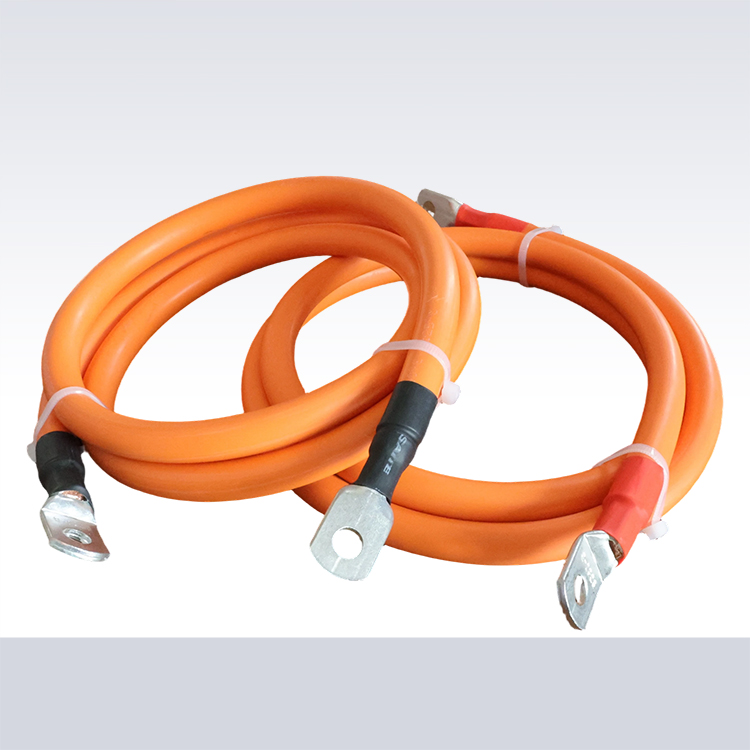
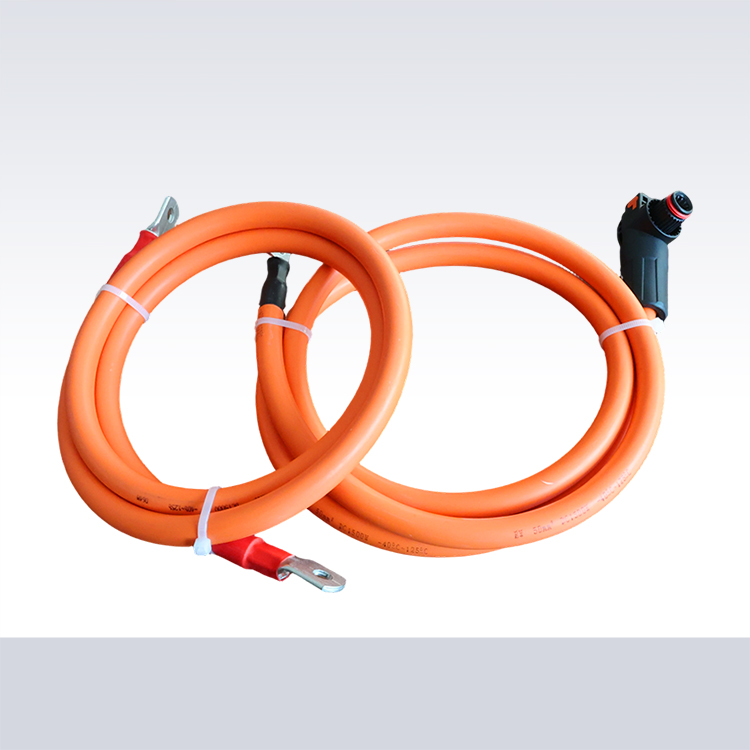
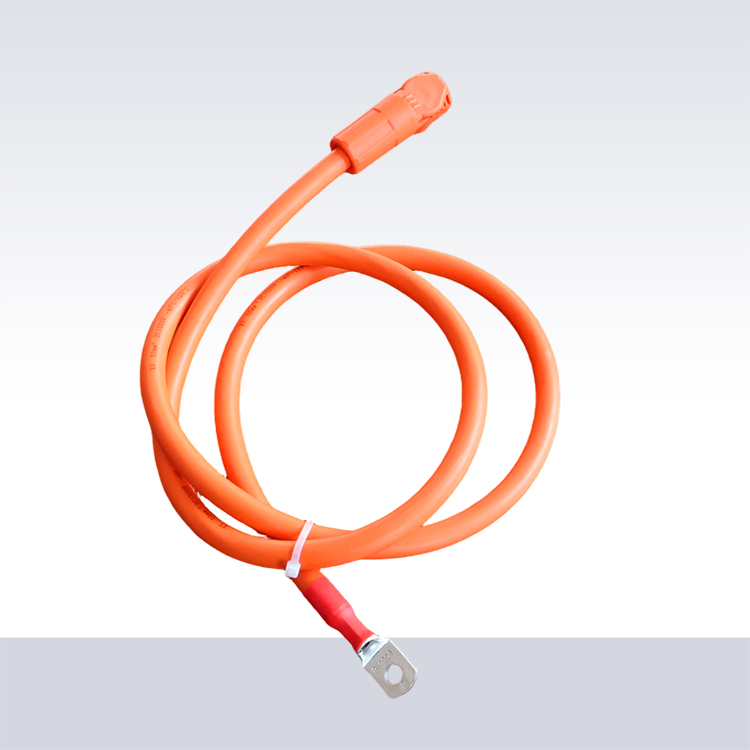
About the manufacturer: Hebei Haoshizai Cable Co., Ltd. produces TUV certified photovoltaic DC cable and solar cable — H1Z2Z2-K 1×4 mm² to 1×35 mm², H1Z2Z2-K 2×4 mm² and 2×6 mm², GF-EER23 2×4 mm² and 2×6 mm², plus 2.5 / 4 / 6 / 16 mm² single-core and 2×4 / 2×6 mm² constructions — together with new energy EV wiring in 16 / 25 / 35 / 50 / 70 mm². Multiple automated production lines, layer-by-layer quality inspection, standardised workshops and consolidated export delivery support both large-scale ground-mounted plants and distributed rooftop projects.






CONTACT
Email:525860526@qq.com
Whatsapp: +86 19933450664
TEL:+86 17803069333
WEB:https://www.haoshizai-solar.com
ADD:Dongyang Village, Daweihe Hui and Manchu Township, Wenan County, Langfang City, Hebei Province