


Current location: HOME > BLOGS > Frequently Asked Questions >
High Performance 4mm² Photovoltaic Cable for Residential Rooftop Solar Systems
time:2026-10-09 10:47:57 author:haoshizai Click:188
Ask any experienced rooftop installer which size they reach for first on a home system and the answer is almost always 4 mm² photovoltaic cable. It is large enough to keep voltage drop negligible on typical string lengths, small enough to terminate cleanly in MC4 style connectors, and flexible enough to be routed under panels without fighting the installer.
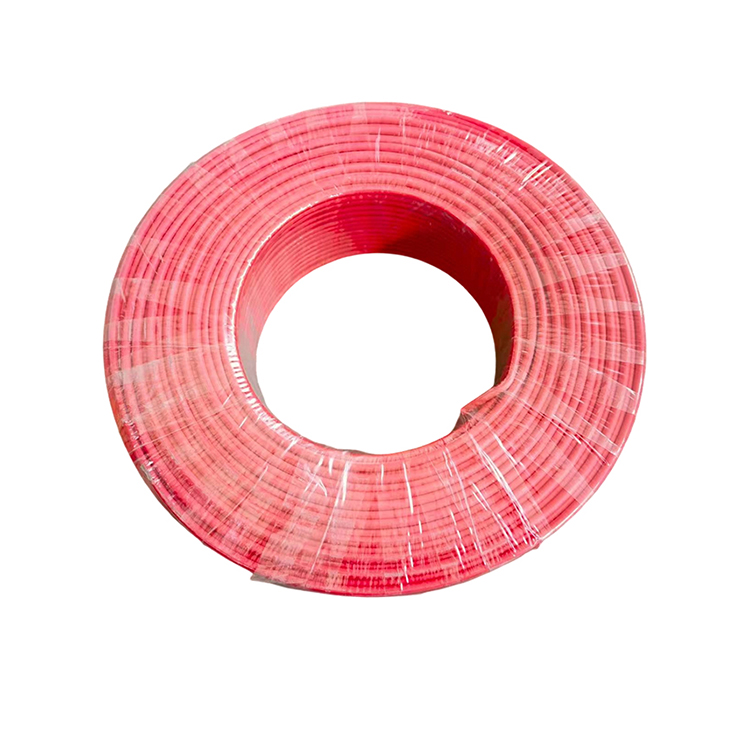
This guide covers when 4 mm² is the right choice, when you should step up to 6 mm² or down to 2.5 mm², how to calculate voltage drop on a real roof, and which installation details determine whether the cable lasts as long as the panels above it.
Why 4 mm² Has Become the Rooftop Standard
Modern residential modules routinely exceed 400 W and deliver short-circuit currents in the 11 to 15 A range. A 4 mm² tinned copper conductor handles that current with substantial thermal margin while keeping DC resistance low enough that a 15 to 25 metre string run loses well under one percent of system voltage.
The second reason is mechanical. 4 mm² stranding is stiff enough to hold a tidy run along a rail yet flexible enough to bend around tile edges and into a roof penetration, which is exactly the balance installers need when working at height for hours at a time.
Comfortable margin above typical 11 to 15 A module short-circuit current
Low DC resistance keeps voltage drop under control on long string runs
Terminates reliably in standard MC4 style connectors
Flexible enough for tight rooftop routing and roof penetrations
Readily stocked, which simplifies repair and extension work
Voltage Drop: the Calculation that Decides the Size
Voltage drop on a DC string is simply Ohm's law over the round-trip conductor length: multiply current by the cable resistance per metre at the operating temperature, then double it for the return path. On a 1 000 V residential string, a 4 mm² pair carrying 12 A over 20 metres typically loses well below 1 percent.
The exception is long or unusual layouts: detached garages, barn roofs, ground-mounted arrays fed back to a distant inverter, or strings on shaded roofs that must be routed the long way round. In those cases run the calculation, and if the result exceeds roughly 1.5 to 2 percent, step up to 6 mm² rather than accept the loss - the extra copper pays for itself in harvested energy.
Calculate over the round-trip length, not one-way distance
Use resistance at operating temperature, not the 20 °C table value
Keep total DC drop ideally under 1.5 to 2 percent
Step up to 6 mm² for long runs or high current modules
Consider 2.5 mm² only for very short, low current links
Connector Compatibility and Termination Quality
Most rooftop PV faults are not cable faults - they are termination faults. A crimped connector that was made with the wrong die, a seal that was not fully seated, or a plug left lying on hot roof tiles all create resistance, heat and eventually a burnt connector.
Using 4 mm² cable with correctly matched connectors and a calibrated crimp tool removes most of that risk. Because the conductor is tinned and finely stranded, the crimp barrel fills properly, and the connection stays stable through the daily thermal cycling that a rooftop array experiences.
Match connector size exactly to the 4 mm² conductor
Use a calibrated crimp tool and verify with a pull test
Seat seals fully before locking the connector body
Never leave unmated connectors resting on hot roof surfaces
Support cable so that no strain is transferred to the connector
UV, Heat and Weather: What the Sheath Has to Survive
Rooftop cable lives in the harshest microclimate of the whole system: full sun on three sides, radiant heat from the roof surface, standing water after rain, and winter frost. A H1Z2Z2-K construction with electron-beam cross-linked sheath is designed precisely for that combination.
The practical consequence is that the sheath does not soften at summer roof temperatures, does not embrittle after years of UV exposure, and does not crack when an installer bends it during a cold morning service visit. That durability is what allows the cable to be warranted alongside the panels rather than replaced halfway through the system life.
Cross-linked halogen-free sheath resists heat and UV
Rated for -40 °C to +90 °C conductor temperature operation
Ozone and hydrolysis resistant for wet and coastal climates
Red and black cores for unambiguous polarity identification
Abrasion resistant against tile, rail and metal edges
Installation Practice that Protects the Cable
Good cable, badly installed, still fails. The recurring mistakes are clipping cable so that it rests against sharp metal edges, leaving slack loops that chafe in wind, running cable through standing water at the roof valley, and skipping the strain relief near penetrations.
A few minutes of discipline fixes all of it: use UV-resistant cable ties or purpose-made clips, keep the cable off the roof surface where possible, support it at regular intervals, and leave a drip loop before any entry point. Those habits cost nothing and protect the single component that is hardest to replace once the array is live.
Use UV-resistant ties or dedicated PV cable clips
Keep cable clear of sharp metal edges and moving parts
Avoid standing water routes and roof valleys
Provide strain relief and drip loops at every entry point
Leave service loops long enough for future re-termination
Sourcing 4 mm² Photovoltaic Cable from Hebei Haoshizai Cable
Hebei Haoshizai Cable Co., Ltd. manufactures 4 mm² photovoltaic and solar cable in standard black and red cores using flexible tinned copper conductors and cross-linked halogen-free insulation and sheath, produced in standardised workshops with modern extrusion equipment and documented process control.
For distributors and installer networks, 4 mm² is normally ordered alongside 2.5 mm² and 6 mm² to cover the full range of string lengths, and can be consolidated in the same container as 10 mm² and 16 mm² sizes or as new energy EV wiring for mixed-energy contractors.
Flexible tinned copper Class 5 conductor
Cross-linked halogen-free insulation and sheath
Black and red cores with clear metre marking
Stocked alongside 2.5 mm², 6 mm², 10 mm² and 16 mm²
Consolidated export shipping with other product families
Frequently Asked Questions
Is 4 mm² photovoltaic cable suitable for all residential systems?
It is the right default for most rooftop strings using modules up to roughly 15 A short-circuit current. Very long runs or high current commercial modules may justify 6 mm².
Can I mix 2.5 mm² and 4 mm² in the same system?
Yes, provided each section is sized for the current it carries and the total voltage drop stays within design limits. Many systems use 4 mm² for strings and larger sizes for the home run to the inverter.
What is the maximum system voltage for 4 mm² solar cable?
H1Z2Z2-K photovoltaic cable is rated for DC systems up to 1 500 V, with 1 000 V and 1 500 V architectures both in common use depending on inverter platform and local code.
Why must the cable be tinned?
Tinned strands resist oxidation in humid rooftop environments, keep contact resistance stable at connectors and prevent the green corrosion that degrades untinned copper over time.
How should cable be fixed on a tiled roof?
Use UV-resistant ties or purpose-made clips, keep the cable off sharp tile and metal edges, support it at regular intervals and strain-relieve it near penetrations.
Do you supply red and black pairs?
Yes. Red and black cores are supplied for unambiguous polarity identification, with clear metre marking and export-standard drum packing.
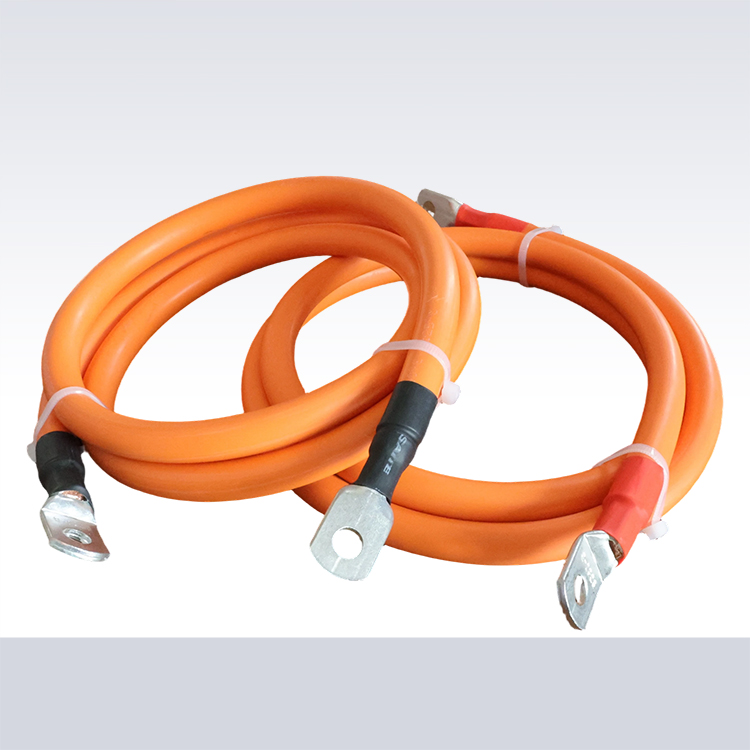
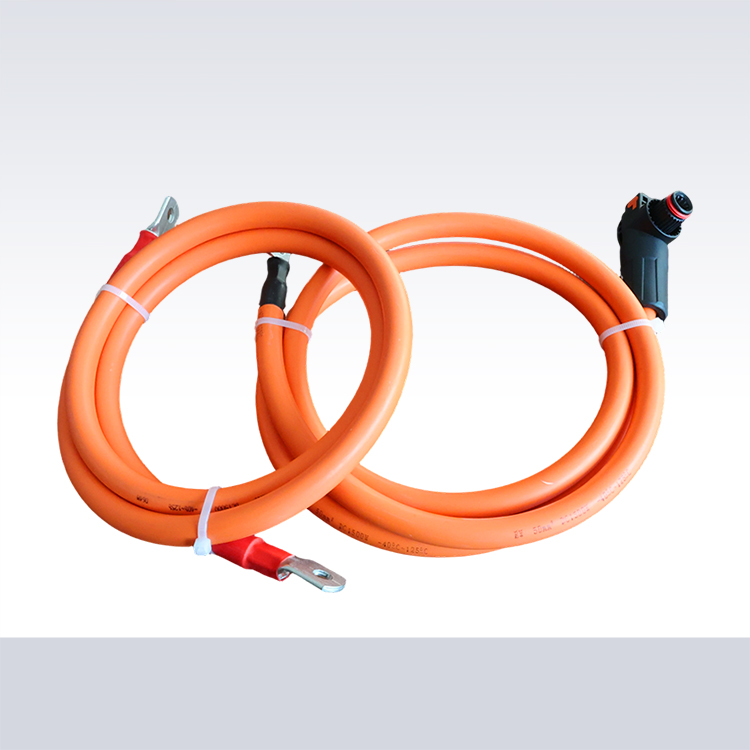
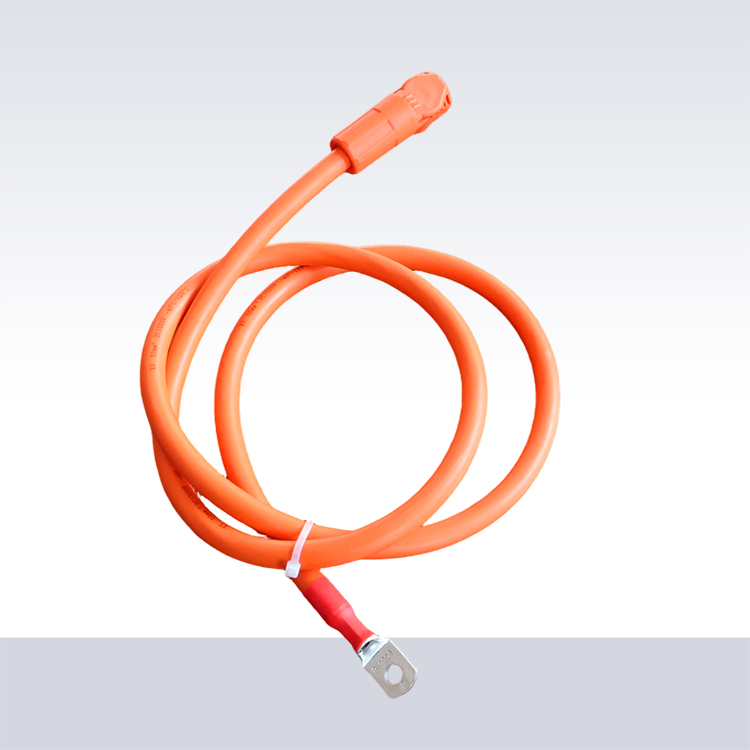
About the manufacturer: Hebei Haoshizai Cable Co., Ltd. produces TUV certified photovoltaic DC cable and solar cable — H1Z2Z2-K 1×4 mm² to 1×35 mm², H1Z2Z2-K 2×4 mm² and 2×6 mm², GF-EER23 2×4 mm² and 2×6 mm², plus 2.5 / 4 / 6 / 16 mm² single-core and 2×4 / 2×6 mm² constructions — together with new energy EV wiring in 16 / 25 / 35 / 50 / 70 mm². Multiple automated production lines, layer-by-layer quality inspection, standardised workshops and consolidated export delivery support both large-scale ground-mounted plants and distributed rooftop projects.






CONTACT
Email:525860526@qq.com
Whatsapp: +86 19933450664
TEL:+86 17803069333
WEB:https://www.haoshizai-solar.com
ADD:Dongyang Village, Daweihe Hui and Manchu Township, Wenan County, Langfang City, Hebei Province