


Current location: HOME > BLOGS > Frequently Asked Questions >
High Performance New Energy EV Wiring Guide for Battery Pack and Fast Charging Systems
time:2026-10-05 09:33:34 author:haoshizai Click:173
Every kilowatt delivered from a traction battery to an inverter, a motor or a DC fast charging inlet travels through copper. The harness that carries it - the new energy EV wiring - is therefore one of the most safety-critical components in an electric vehicle. Undersized conductors overheat, stiff cables crack in cold climates, and poorly shielded runs inject electromagnetic noise into sensitive control electronics.
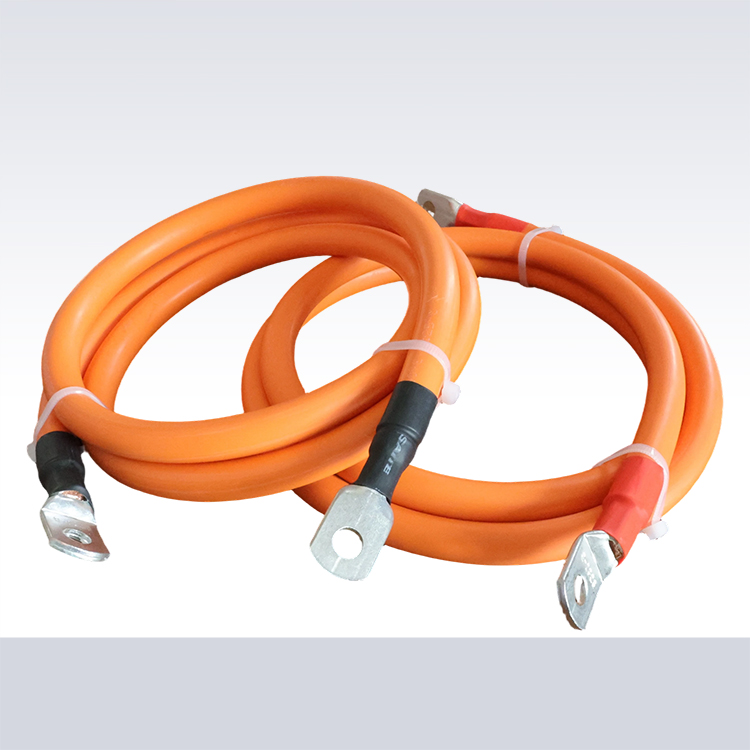
This guide explains how modern EV cable is constructed, how to size 25 mm² to 70 mm² conductors for real duty cycles, which temperature and voltage classes matter, and what buyers should verify before releasing a purchase order to an electric vehicle cable manufacturer.
What Counts as New Energy EV Wiring?
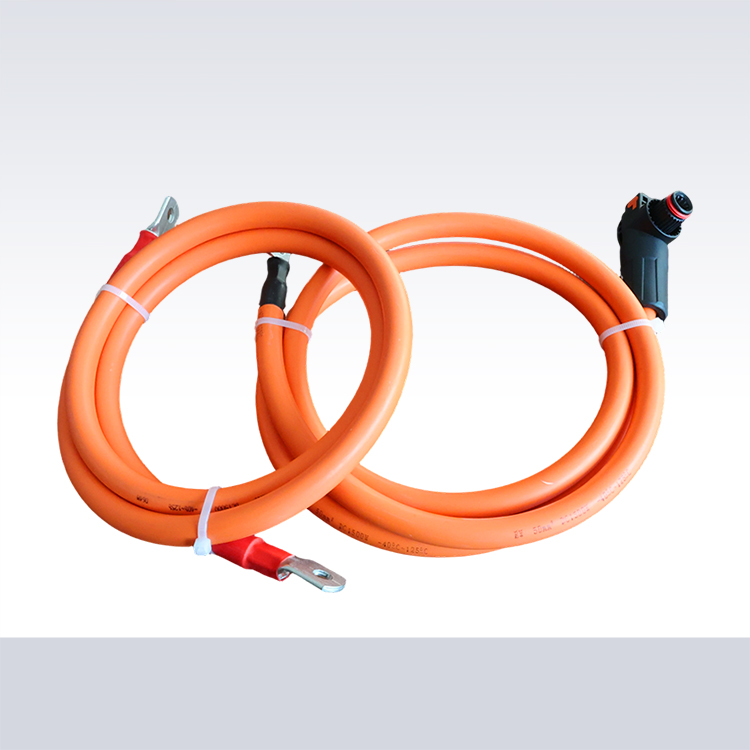
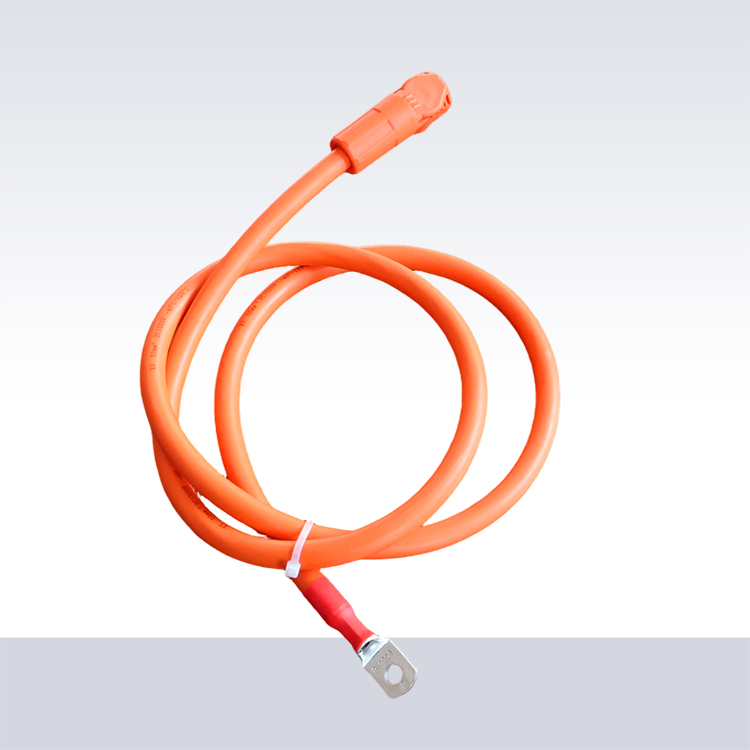
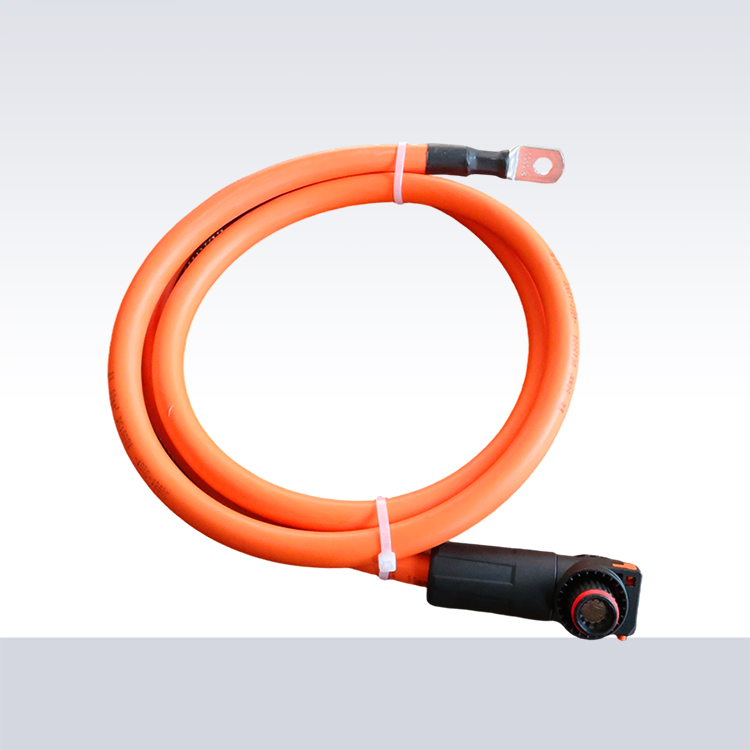
New energy EV wiring refers to the insulated, often screened single-core cables used inside battery packs, between the pack and the power distribution unit (PDU), from the inverter to the traction motor, and along the DC charging path. Unlike conventional automotive wire, these cables must carry continuous high current at elevated voltage, survive under-hood temperatures, and remain flexible enough to be routed through tight engine bays.
Typical cross-sections stocked by Hebei Haoshizai Cable Co., Ltd. run from 25 mm² through 35 mm², 50 mm² and up to 70 mm², which covers the majority of battery main loop, charger inlet and motor phase applications in passenger cars, light commercial vehicles and off-highway new energy equipment.
Battery pack internal links and module interconnects
Pack-to-PDU and PDU-to-inverter high voltage runs
Traction motor phase leads
DC fast charging inlets and on-board charger circuits
Auxiliary high voltage loads: PTC heaters, compressors, DC-DC converters
Conductor, Insulation and Screen: the Three Decisions that Define Performance
The conductor is almost always fine-stranded bare or tinned copper to IEC 60228 Class 5 or Class 6, because a battery harness is bent, twisted and clipped during assembly. Tinning adds solderability and long-term corrosion resistance, which matters when a pack is expected to last a decade or more.
Insulation selection is driven by the temperature class of the installation: cross-linked polyolefin (XLPO/XLPE) for 125 °C and 150 °C service, and silicone rubber for 180 °C to 200 °C zones close to the motor or exhaust-adjacent hardware. Wall thickness, dielectric strength and thermal ageing behaviour are what separate a qualified EV cable from a generic wire.
Where the cable shares space with signal harnesses, a tinned copper braid or aluminium-polymer foil screen keeps inverter switching noise out of CAN, BMS and resolver lines. Screen coverage and drain wire construction should be specified at the drawing stage, not discovered during EMC testing.
Class 5 / Class 6 flexible stranded copper for tight routing
XLPO / XLPE insulation for 125 °C and 150 °C zones
Silicone rubber for 180 °C to 200 °C hot spots
Braided or foil screening with drain wire for EMC compliance
Halogen-free, low-smoke jackets for enclosed passenger compartments
How to Size 25 mm² to 70 mm² EV Cable Correctly
Conductor sizing is not a single-number exercise. It is the intersection of continuous current, duty cycle, ambient temperature, bundling and allowable voltage drop. A 50 mm² run in free air carries far more than the same cable bundled with six others inside a sealed battery enclosure at 70 °C ambient.
As a practical starting point for high voltage DC loops, engineers typically work back from the peak current of the duty cycle, apply a bundling and ambient derating factor, then confirm that voltage drop stays below roughly 2 to 3 percent of system voltage over the run length. Where the calculated size falls between two standard cross-sections, choose the larger one - the cost delta is small compared with the thermal margin gained.
Start from peak and continuous current of the duty cycle
Apply derating for ambient temperature and cable bundling
Check voltage drop across the actual harness length
Verify short-circuit withstand of the insulation system
Confirm terminal and connector crimp compatibility
Temperature Class, Voltage Rating and Compliance
New energy EV wiring is normally rated for 600 V to 1000 V AC/DC service, with 1500 V DC architectures increasingly requested for high power charging platforms. Always confirm that the insulation system, not just the conductor, is rated for the full system voltage including transient overshoot from inverter switching.
Automotive cable standards such as the ISO 6722 and ISO 19642 families - together with the LV 112 / LV 216 specifications used by many European OEMs - define test regimes for thermal endurance, abrasion, fluid resistance, flame spread and flexibility after heat ageing. Requesting test reports against these standards is the fastest way to separate a genuine EV cable supplier from a trader.
Voltage class: 600 V, 1000 V and emerging 1500 V DC platforms
Temperature classes 125 °C / 150 °C / 180 °C / 200 °C
Fluid, salt spray and flame resistance testing
Abrasion and scrape resistance for harness assembly
Halogen-free options for enclosed occupied spaces
Failure Modes Buyers Should Design Out Early
Most field failures in EV harnesses are mechanical, not electrical. Vibration at unclamped spans work-hardens the conductor and cracks insulation at the crimp barrel; over-tightened cable ties cut into the jacket; and routing a cable across a sharp bracket edge turns a 200 000 km design into a warranty claim.
The second recurring issue is thermal stacking: several high current cables routed together through a hot zone. Because each cable adds heat to its neighbours, the bundle centre can exceed the rated conductor temperature even though every individual cable is within its nominal current. Layout review with derating tables is far cheaper than a harness redesign.
Cracked insulation at crimp barrels from vibration
Jacket damage from sharp routing edges and over-tightened ties
Thermal stacking in bundled high current runs
Corrosion at unsealed terminals in humid climates
EMC issues from missing or poorly terminated screens
Why Source EV Wiring from Hebei Haoshizai Cable Co., Ltd.
Hebei Haoshizai Cable Co., Ltd. operates standardised production workshops with modern extrusion, stranding and braiding equipment, supported by mature process control and testing routines. Standard new energy EV wiring is stocked in 25 mm², 35 mm², 50 mm² and 70 mm², and non-standard constructions - different stranding, alternative jacket colours, printed legends, custom lengths and cut-and-strip kits - can be manufactured to drawing.
For overseas buyers, the practical advantages are consolidation and responsiveness: EV wiring and photovoltaic cable can be produced, inspected and shipped together, which reduces freight cost, simplifies documentation and shortens the path from sample approval to series supply.
Standardised workshops with modern extrusion and braiding lines
Stocked cross-sections from 25 mm² to 70 mm²
OEM / ODM support: construction, jacket colour, printing, cut lengths
Consolidated shipping with photovoltaic and solar cable orders
Engineering support on sizing, derating and harness routing questions
Frequently Asked Questions
What cross-sections of new energy EV wiring are most commonly requested?
25 mm², 35 mm², 50 mm² and 70 mm² cover most battery main loop, inverter, motor and DC charging applications. Smaller cross-sections are used for auxiliary high voltage loads such as PTC heaters and DC-DC converters.
Should I choose tinned or bare copper conductor?
Tinned copper is generally preferred for battery pack and charging applications because it resists oxidation, improves long-term contact reliability at terminals and is easier to solder during harness assembly.
What temperature class do I need for a motor-adjacent cable?
Motor and inverter zones frequently require 150 °C to 200 °C rated insulation, typically silicone rubber. Cooler zones inside the pack can use 125 °C cross-linked polyolefin constructions.
Can EV wiring and solar cable be shipped in one container?
Yes. Hebei Haoshizai Cable Co., Ltd. produces both new energy EV wiring and photovoltaic cable, so mixed orders can be consolidated into a single shipment with unified documentation.
Do you support OEM and ODM projects?
Yes. Custom constructions, jacket colours, printed legends, cut-to-lengthservice and packaging to customer specification are supported for series production programmes.
About the manufacturer: Hebei Haoshizai Cable Co., Ltd. produces TUV certified photovoltaic DC cable and solar cable — H1Z2Z2-K 1×4 mm² to 1×35 mm², H1Z2Z2-K 2×4 mm² and 2×6 mm², GF-EER23 2×4 mm² and 2×6 mm², plus 2.5 / 4 / 6 / 16 mm² single-core and 2×4 / 2×6 mm² constructions — together with new energy EV wiring in 16 / 25 / 35 / 50 / 70 mm². Multiple automated production lines, layer-by-layer quality inspection, standardised workshops and consolidated export delivery support both large-scale ground-mounted plants and distributed rooftop projects.






CONTACT
Email:525860526@qq.com
Whatsapp: +86 19933450664
TEL:+86 17803069333
WEB:https://www.haoshizai-solar.com
ADD:Dongyang Village, Daweihe Hui and Manchu Township, Wenan County, Langfang City, Hebei Province