


Current location: HOME > BLOGS > Frequently Asked Questions >
PV Cable Types and Applications in Solar Power Systems
time:2026-06-17 08:11:50 author:haoshizai Click:144
PV Cable Types and Applications in Solar Power Systems
Photovoltaic (PV) cables serve as the critical interconnection infrastructure in solar power systems, carrying DC power from solar panels to inverters and AC power from inverters to electrical panels or the utility grid. Different PV cable types address specific application requirements including voltage rating, environmental exposure, and current-carrying capacity. Understanding these variations helps system designers and installers select appropriate cables for optimal performance and safety.
The solar industry has developed specialized cable types that outperform standard electrical cables in outdoor installations. These PV-specific cables incorporate materials and construction techniques that withstand decades of UV exposure, temperature cycling, and moisture exposure while maintaining electrical integrity and safety.
Single-Core PV Cables
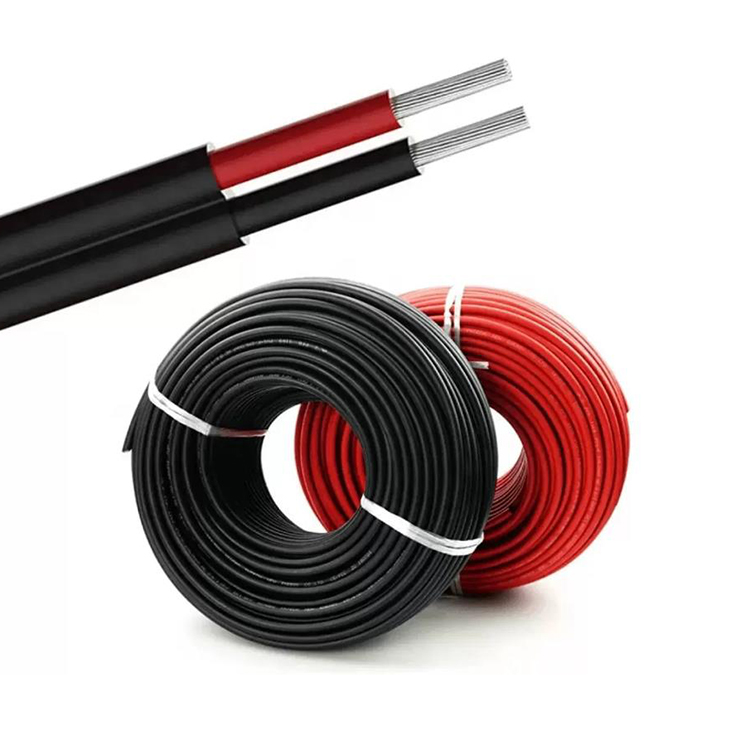
Single-core PV cables feature one conductor within an insulated jacket, typically used for positive and negative connections in photovoltaic strings. These cables offer flexibility for routing through complex installation paths while providing clear identification of conductor polarity through color coding. Red jackets typically indicate positive conductors, while black or blue identifies negative conductors.
The simple construction of single-core cables facilitates installation in conduit systems or cable trays where multiple circuits run together. Separate conductors allow installers to route positive and negative leads independently, accommodating architectural features or equipment placement constraints that would complicate bundled cable installations.
Quality single-core PV cables from established manufacturers provide consistent electrical characteristics and environmental resistance. These cables meet or exceed IEC 62930 and TUV standards for photovoltaic applications, ensuring decades of reliable service in demanding outdoor environments.
Dual-Core PV Cables
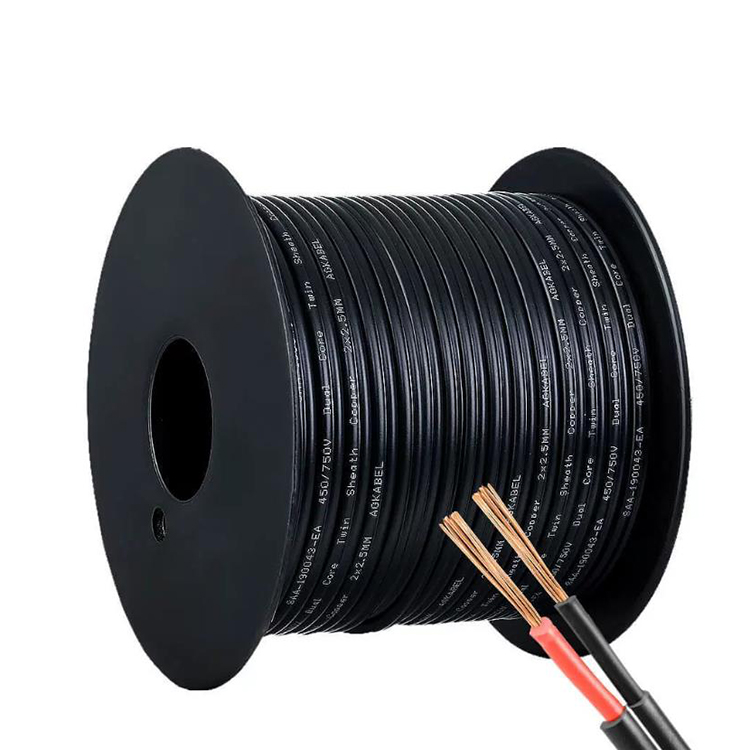
Dual-core PV cables combine positive and negative conductors within a single outer jacket. This configuration simplifies installation by reducing the number of cables that must be routed through conduit or supported by cable management systems. The integrated design also improves aesthetics by reducing visual clutter on building exteriors or equipment pads.
The shared jacket protects both conductors from environmental exposure while reducing installation time compared to pulling separate cables. Dual-core cables work particularly well for short runs between combiner boxes and inverters where space constraints favor compact cable configurations.
However, dual-core cables may complicate fault isolation if one conductor develops problems. Separate circuits allow targeted troubleshooting, while dual-core cables require replacement of both conductors if either fails. Installers should consider maintenance access when selecting between single and dual-core options.
High-Voltage PV Cables
Modern photovoltaic systems increasingly operate at higher voltages to reduce balance-of-system costs and improve efficiency. High-voltage PV cables rated for 1,500 volts DC accommodate these system designs while providing adequate safety margins. The enhanced insulation systems in these cables prevent electrical breakdown under sustained high-voltage operation.
1,500-volt PV cable systems allow longer string configurations that reduce the number of combiner boxes and DC isolation switches required. This simplification reduces material costs and potential failure points while improving system reliability through component reduction.
Quality high-voltage PV cables undergo rigorous testing to verify insulation integrity under electrical stress. Reputable PV cable suppliers provide test documentation demonstrating compliance with voltage rating standards. This documentation supports system commissioning and acceptance testing.
Flexible PV Cables
Flexible PV cables incorporate finely stranded conductors that facilitate routing around building features and equipment obstacles. The enhanced flexibility proves particularly valuable during retrofits where existing structures limit cable routing options. Flexible cables also simplify connections to equipment with limited access space.
The stranding configuration affects both flexibility and current distribution across the conductor cross-section. Optimal stranding balances flexibility with uniform current distribution to prevent hot spots that could degrade cable performance over time. Quality PV cable manufacturers optimize stranding geometry for both properties.
Installation practices for flexible cables require attention to minimum bend radius specifications. Excessive bending can damage conductor strands or insulation systems, creating failure points that compromise system reliability. Following manufacturer bending recommendations ensures long-term cable performance.
Applications in Residential Solar
Residential solar installations typically use 4mm² or 6mm² PV cables for string conductors. These sizes balance current-carrying capacity with cost-effectiveness for systems with relatively short cable runs. Residential applications favor cables that balance performance with aesthetic considerations, as cables often route along rooflines or building exteriors.
Rooftop installations require PV cables that withstand extreme temperature cycling and UV exposure. Quality PV cables specified for these applications incorporate stabilization packages that prevent insulation degradation despite decades of weather exposure. Proper cable support systems prevent mechanical stress that could compromise weatherproof integrity.
Ground-mounted residential systems may use larger cable sizes to accommodate longer runs between panel arrays and inverter locations. Voltage drop calculations determine appropriate cable sizing to maintain system efficiency. Professional system designers consider both electrical and economic factors when selecting residential PV cable specifications.
Commercial and Industrial Applications
Commercial solar installations often require larger PV cable sizes to accommodate higher system currents. 10mm², 16mm², and larger cables may be necessary for main feeder circuits between combiner boxes and central inverters. These applications demand cables with robust insulation systems and excellent current-carrying capacity.
Industrial solar installations, including mounting on warehouses or manufacturing facilities, may expose PV cables to chemical vapors or extreme temperatures. Cables specified for these environments incorporate enhanced jacketing materials that resist chemical attack while maintaining electrical properties. Consulting with PV cable suppliers ensures appropriate material selection.
Large commercial installations benefit from standardized PV cable types that simplify inventory management and installation training. Establishing preferred cable specifications reduces procurement complexity while ensuring consistent quality across project phases. Working with experienced PV cable manufacturers supports these standardization efforts.
Utility-Scale Solar Applications
Utility-scale solar installations represent the most demanding applications for PV cables. These projects require thousands of cables operating continuously for decades while exposed to extreme environmental conditions. Cable selection prioritizes long-term reliability and ease of installation across extensive site areas.
Central inverter configurations concentrate DC power from multiple strings, requiring large-capacity PV cables for main feeder circuits. These applications may use 35mm², 50mm², or larger cables rated for 1,500 volts DC. Proper cable sizing accounts for both electrical performance and installation handling characteristics.
Bulk procurement for utility projects enables cost optimization while ensuring consistent cable quality across the installation. Established PV cable suppliers provide volume pricing and delivery scheduling that supports large project execution. Developing supplier relationships early in project planning ensures cable availability when needed.
Conclusion
PV cable selection requires matching cable characteristics to specific application requirements. Voltage rating, conductor size, environmental resistance, and installation considerations all influence optimal cable choice. Working with knowledgeable PV cable suppliers ensures appropriate selection while accessing technical support throughout project execution.
Quality PV cables from reputable manufacturers provide decades of reliable service while maintaining system efficiency and safety. Investing in appropriate cables protects solar installation investments while ensuring compliance with applicable standards and regulations. The expanding solar market continues creating new opportunities for cable innovations that further improve system performance and installation efficiency.
References
International Electrotechnical Commission. (2024). IEC 62930 Photovoltaic Cable Standards.
European Solar Industry Association. (2023). PV Cable Selection Guidelines.
Solar Power World Magazine. (2024). Photovoltaic Cable Technology Review.
Renewable Energy World. (2023). Solar Cable Applications and Standards.






CONTACT
Email:525860526@qq.com
Whatsapp: +86 19933450664
TEL:+86 17803069333
WEB:https://www.haoshizai-solar.com
ADD:Dongyang Village, Daweihe Hui and Manchu Township, Wenan County, Langfang City, Hebei Province