


Current location: HOME > BLOGS > Frequently Asked Questions >
High Temperature Resistant EV Wiring 70mm² for High Power Charging Applications
time:2026-10-17 11:46:09 author:haoshizai Click:173
As charging power climbs past 350 kW and commercial platforms move to higher pack voltages, the current carried by individual cable runs rises accordingly. At that level, 70 mm² new energy EV wiring is no longer an unusual request - it is the practical answer for high power charging inlets, main battery loops and heavy-duty traction circuits.
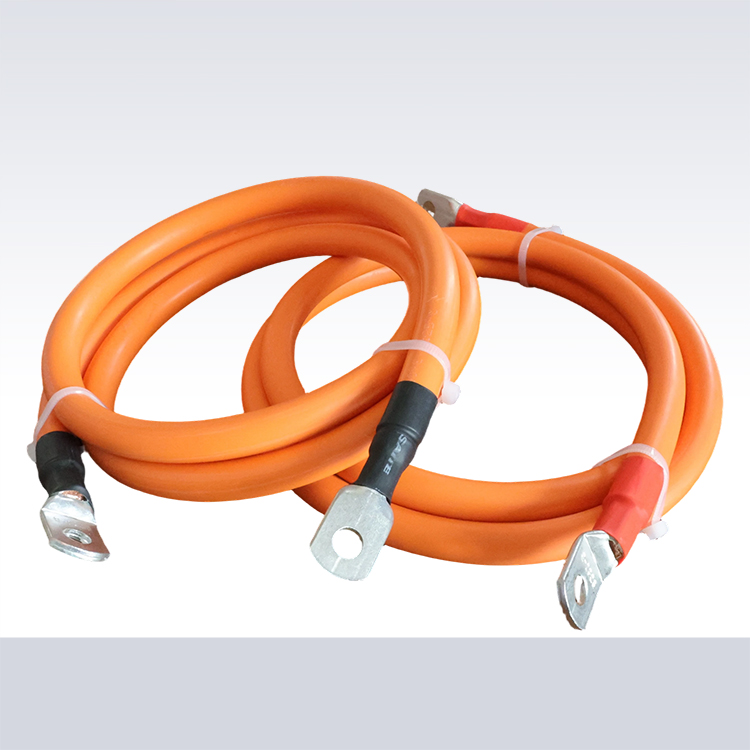
This article explains where 70 mm² fits, how temperature class and insulation material determine whether it survives, and the mechanical and termination practices that make a high-current EV cable reliable in service.
Where 70 mm² EV Cable Is Used
The applications that push a design to 70 mm² share one characteristic: sustained high current with limited tolerance for voltage drop. DC fast charging inlets on commercial vehicles, main pack-to-PDU links on high-capacity batteries, heavy-duty traction drives and stationary charging infrastructure all fall into this category.
In each case the alternative - paralleling several smaller cables - adds cost, weight, connector complexity and failure points. A single correctly specified 70 mm² run is often the simpler and more robust engineering answer.
DC fast charging inlets on commercial and heavy platforms
Main battery pack to power distribution unit links
High capacity traction drive circuits
Charging infrastructure and stationary energy systems
Bus, truck and off-highway new energy equipment
Temperature Class: Choosing Between XLPO and Silicone
At high current, the limiting factor is usually heat rather than voltage. Cross-linked polyolefin insulation at 125 °C or 150 °C suits most pack and charging paths, while silicone rubber rated at 180 °C to 200 °C is used near motors, inverters and other genuine hot spots.
The decision should follow measured or simulated conductor temperature, not intuition. Silicone brings excellent flexibility and thermal endurance but different mechanical handling and abrasion characteristics, so it is specified where the temperature requirement genuinely exists rather than everywhere by default.
XLPO / XLPE for 125 °C and 150 °C general high voltage paths
Silicone rubber for 180 °C to 200 °C hot zones
Derating applied for ambient and bundling conditions
Thermal endurance matched to the duty cycle
Mechanical properties checked alongside thermal rating
Flexibility and Bend Radius at Large Cross-Section
A 70 mm² conductor is inherently stiff, which makes stranding quality decisive. Fine Class 5 or Class 6 stranding keeps the cable routable, but it also means the minimum bend radius must be respected during installation - forcing a tight bend concentrates stress on the outer strands and can deform the insulation at the bend.
Practical guidance: define the minimum bend radius in the harness drawing, use bending supports during assembly, and never route a large cross-section cable so that the bend is held under tension by a clip or a connector.
Fine Class 5 / Class 6 stranding for manageable handling
Defined minimum bend radius in the harness drawing
Bending supports during assembly
No bends held under tension by clips or connectors
Strain relief at every termination
Shielding and EMC at High Current
High current and high switching frequency together create significant electromagnetic noise. On a 70 mm² traction or charging run, an effective screen - braided tinned copper, foil, or a combination - keeps that noise out of BMS, CAN and sensor circuits.
The screen is only as good as its termination. A 360-degree termination to the connector backshell or enclosure, rather than a pigtail drain wire, is what maintains shielding effectiveness at the frequencies that matter.
Braided or combined foil and braid screening
Low-impedance 360-degree screen termination
Separation from signal and sensor harnesses
Verified during system-level EMC testing
Documented screen coverage percentage
Termination: the Most Common Failure Point
Almost every high-current cable failure occurs at the ends, not in the middle. Causes include undersized or incorrectly crimped terminals, insufficient contact area, oxidation at the interface, and mechanical strain transferred into the joint by inadequate support.
Prevention is straightforward but must be specified: correct terminal for the cross-section, calibrated crimp tooling with periodic verification, contact resistance measurement on samples, and strain relief that takes all mechanical load off the electrical joint.
Terminal and tooling matched to 70 mm² conductor
Calibrated crimp process with periodic verification
Contact resistance checks on production samples
Strain relief and support near every termination
Protection against moisture and corrosion at the joint
Sourcing 70 mm² New Energy EV Wiring
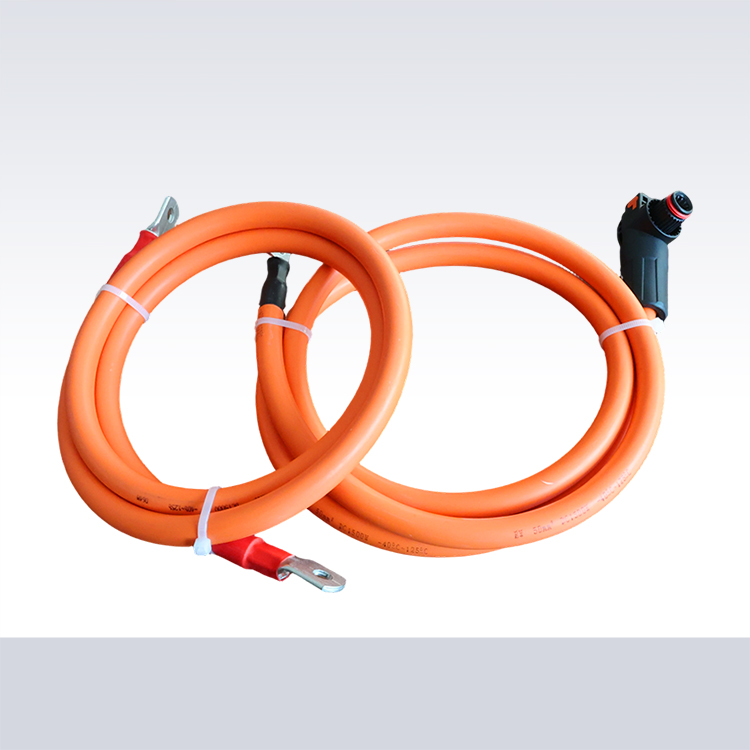
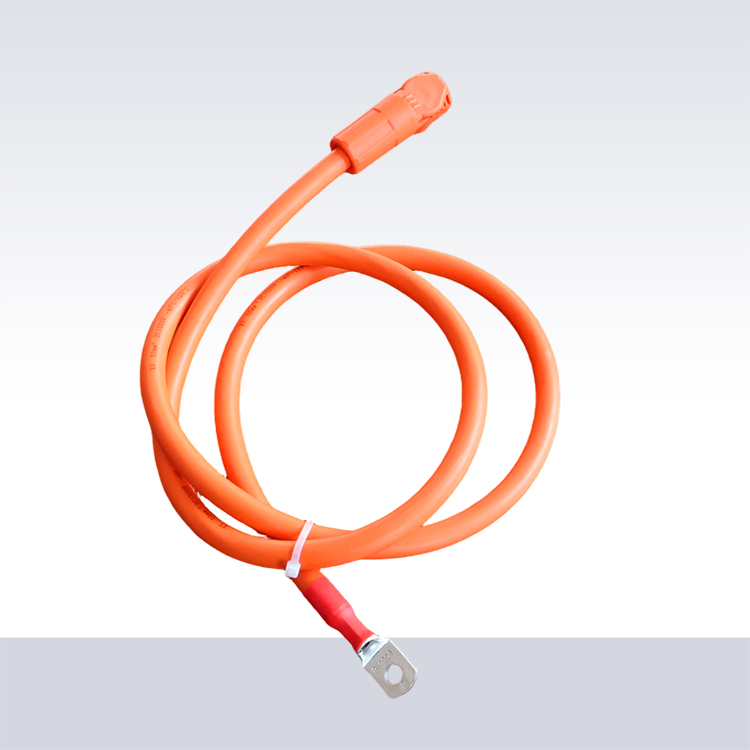
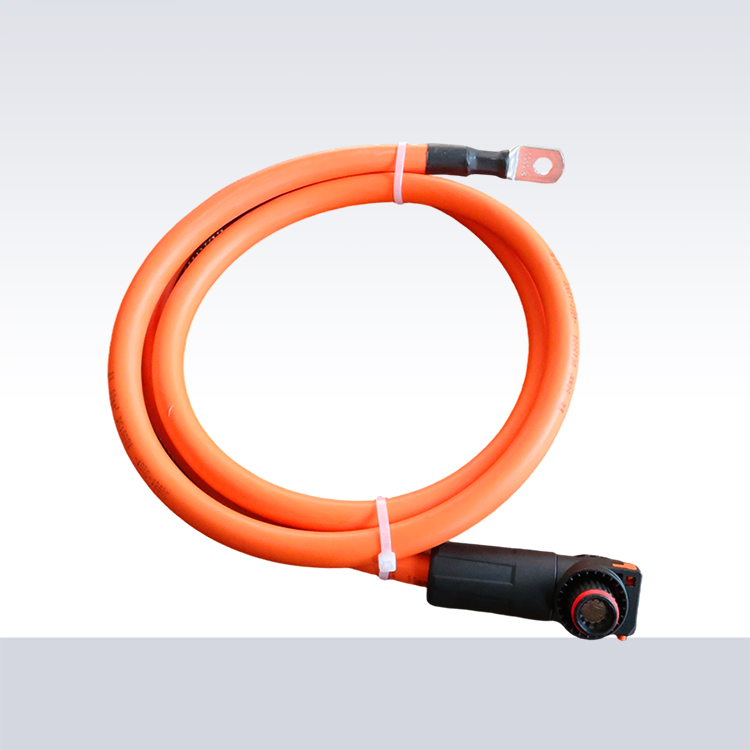
Hebei Haoshizai Cable Co., Ltd. supplies new energy EV wiring in 25 mm², 35 mm², 50 mm² and 70 mm² as standard, with tinned or bare copper conductor options, cross-linked or silicone insulation depending on temperature class, and shielding, jacket colour and printing to specification.
For programmes moving from prototype to series production, the same construction can be held consistent across volumes, and shipments can be consolidated with photovoltaic cable where a customer manufactures both EV and solar products.
Standard stocked sizes 25 / 35 / 50 / 70 mm²
Tinned or bare copper, XLPO or silicone insulation
Screened and unscreened constructions
Custom jacket colours, printing and cut lengths
Consolidated export shipping with photovoltaic cable
Frequently Asked Questions
When is 70 mm² EV wiring required?
When sustained current, allowable voltage drop and thermal limits exceed what 50 mm² can deliver - typically DC fast charging inlets, main battery loops on high-capacity packs and heavy-duty traction circuits.
What insulation should I choose for high temperature zones?
Cross-linked polyolefin for 125 °C to 150 °C service, and silicone rubber for 180 °C to 200 °C zones near motors and inverters. Base the choice on calculated conductor temperature.
Is 70 mm² cable difficult to install?
It is stiff, so the minimum bend radius must be respected and bending supports used during assembly. Fine Class 5 or Class 6 stranding keeps handling manageable.
Do high current EV cables need shielding?
In most cases yes, to protect BMS, CAN and sensor circuits from inverter switching noise. Terminate the screen 360 degrees for effective high-frequency performance.
What causes most high-current cable failures?
Termination issues: incorrect crimp tooling, undersized terminals, oxidation at the interface and mechanical strain transferred into the joint.
Can EV wiring and solar cable be ordered together?
Yes. Both are manufactured by Hebei Haoshizai Cable Co., Ltd., so mixed containers with unified export documentation are available.
About the manufacturer: Hebei Haoshizai Cable Co., Ltd. produces TUV certified photovoltaic DC cable and solar cable — H1Z2Z2-K 1×4 mm² to 1×35 mm², H1Z2Z2-K 2×4 mm² and 2×6 mm², GF-EER23 2×4 mm² and 2×6 mm², plus 2.5 / 4 / 6 / 16 mm² single-core and 2×4 / 2×6 mm² constructions — together with new energy EV wiring in 16 / 25 / 35 / 50 / 70 mm². Multiple automated production lines, layer-by-layer quality inspection, standardised workshops and consolidated export delivery support both large-scale ground-mounted plants and distributed rooftop projects.






CONTACT
Email:525860526@qq.com
Whatsapp: +86 19933450664
TEL:+86 17803069333
WEB:https://www.haoshizai-solar.com
ADD:Dongyang Village, Daweihe Hui and Manchu Township, Wenan County, Langfang City, Hebei Province