


Current location: HOME > BLOGS > Frequently Asked Questions >
H1Z2Z2-K Photovoltaic Cable Explained: Sizes, Construction and Selection for PV Projects
time:2026-10-13 11:06:04 author:haoshizai Click:83
The letters printed on a solar cable are not decoration - they are the specification. H1Z2Z2-K tells you the cable is a halogen-free, cross-linked, flexible DC photovoltaic cable rated for 1 500 V systems and continuous 90 °C conductor operation. Understanding that code is the fastest way to confirm that the cable on your project is genuinely built for a 25-year outdoor life.
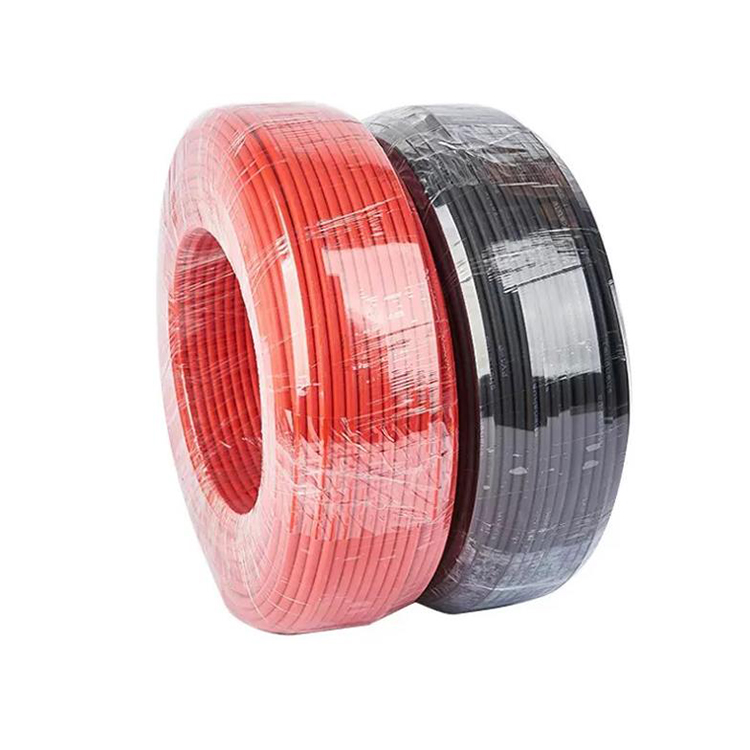
Hebei Haoshizai Cable Co., Ltd. manufactures a complete family of photovoltaic DC cables - H1Z2Z2-K in single-core sizes from 1×4 mm² through 1×35 mm² and twin constructions in 2×4 mm² and 2×6 mm², alongside GF-EER23 2×4 mm² and 2×6 mm² - supplied as TUV certified photovoltaic cable for utility-scale ground-mounted plants and distributed rooftop systems alike.
What H1Z2Z2-K Actually Means
The designation comes from the harmonised European code for photovoltaic DC cable, defined in EN 50618 and its international counterpart IEC 62930. Each element of the code carries meaning: the conductor class and flexibility, the insulation and sheath compounds, the halogen-free requirement and the DC voltage rating.
In practical terms, a H1Z2Z2-K photovoltaic cable uses flexible tinned copper Class 5 stranding, electron-beam cross-linked halogen-free insulation and sheath, is rated for 1 500 V DC systems, operates at 90 °C continuous conductor temperature and survives short-circuit temperatures around 250 °C, while remaining flexible down to -40 °C.
Because the code is tied to a full test regime, it is the single most useful line on a cable datasheet. If a quotation offers a 'solar cable' without H1Z2Z2-K or an equivalent UL 4703 designation and supporting test evidence, the burden of proof sits with the supplier.
Harmonised code defined by EN 50618 / IEC 62930
Flexible tinned copper Class 5 conductor
Electron-beam cross-linked halogen-free insulation and sheath
1 500 V DC system rating
90 °C continuous and approximately 250 °C short-circuit conductor rating
Cold bend performance down to -40 °C
Single-Core Range: 1×4 mm² Through 1×35 mm²
Single-core H1Z2Z2-K is the workhorse of a PV array. Black and red cores are run as a pair for each string, which keeps polarity unambiguous and makes fault-finding straightforward years after commissioning.
Hebei Haoshizai Cable Co., Ltd. supplies the single-core sequence from 1×4 mm² through 1×6 mm² and upward to 1×35 mm², which covers everything from short rooftop string links to high-current trunk runs from a combiner box to the inverter. Smaller 2.5 mm² and 4 mm² sizes serve residential and light commercial strings, while 10 mm² and 16 mm² handle array home runs and combiner outputs.
The engineering logic is simple: as string current and run length grow, conductor cross-section grows with them. Keeping the whole range on one construction - same tinned copper, same cross-linked compound, same jacket colour system - means installer training and termination practice stay valid across every size on site.
1×4 mm² and 1×6 mm²: standard residential and commercial strings
1×10 mm² and 1×16 mm²: array home runs and combiner outputs
Up to 1×35 mm²: high-current trunk circuits on utility projects
Red and black cores for unambiguous DC polarity
One construction across the range simplifies installation and stock
Twin Constructions: 2×4 mm² and 2×6 mm²
Twin-core photovoltaic cable carries both conductors of a DC circuit in one sheath. On long parallel runs it is faster to install, presents a tidier appearance on visible routes and reduces the chance of a polarity error during termination.
Hebei Haoshizai Cable Co., Ltd. produces H1Z2Z2-K 2×4 mm² and 2×6 mm², together with GF-EER23 constructions in the same 2×4 mm² and 2×6 mm² sizes. Where an installer prefers one pull instead of two, or where a route is visible to the building owner, twin construction is usually the better choice.
The trade-off is flexibility in tight corners and slightly different handling at termination, so twin cable is best suited to straight or gently curving runs rather than complex rooftop geometry with many direction changes.
H1Z2Z2-K 2×4 mm² and 2×6 mm² available
GF-EER23 2×4 mm² and 2×6 mm² available
Faster installation on long parallel runs
Cleaner appearance on visible routes
Reduced risk of polarity errors
Best suited to straight or gently curving routes
GF-EER23: Where It Fits
GF-EER23 appears alongside H1Z2Z2-K in the photovoltaic DC cable range, offered in 2×4 mm² and 2×6 mm² twin constructions. It serves projects and markets where a different construction platform or approval route is preferred, while still delivering the halogen-free, cross-linked, UV-stable performance that outdoor DC service demands.
For buyers the decision is usually driven by project specification or market approval rather than by performance: where H1Z2Z2-K is named, supply H1Z2Z2-K; where GF-EER23 is accepted or specified, it provides the equivalent practical behaviour in the sizes most commonly used for array and string wiring.
Confirming which designation your project documents require before ordering avoids the expensive situation of a compliant cable being rejected because it does not match the named specification.
GF-EER23 offered in 2×4 mm² and 2×6 mm²
Halogen-free cross-linked construction for outdoor DC service
Selected by project specification or market approval route
Equivalent practical performance in common array sizes
Confirm the named designation in project documents before ordering
TUV Certification: Why It Matters on Industrial Solar Projects
TUV certification means an independent third party has tested the cable against the relevant standard and audits the factory to confirm that production continues to match the tested sample. It is not a one-off laboratory result - it is an ongoing assurance that the drum delivered next year behaves like the one that was approved.
For industrial and utility projects this matters commercially as well as technically: insurers, lenders and grid operators increasingly expect independently certified components, and a project that cannot evidence certification can face delays at inspection or during financing due diligence.
Hebei Haoshizai Cable Co., Ltd. supplies TUV certified photovoltaic cables for industrial solar projects, backed by multiple automated production lines and a layer-by-layer quality inspection regime so that certified performance is maintained at volume.
Independent type testing against the applicable standard
Ongoing factory audit, not a one-off test report
Accepted by insurers, lenders and inspection bodies
Reduces risk of delay at project inspection
Maintained at volume through documented process control
How to Select the Right Photovoltaic DC Cable
Selection comes down to four questions: what does the project specification name, what current does the circuit carry, how long is the run, and what environment will the cable see. Answer those and the size and construction follow almost mechanically.
Start from the named designation - H1Z2Z2-K, GF-EER23 or UL 4703 - then size the conductor from corrected string current and voltage drop, then confirm environmental suitability: UV and ozone exposure, buried duct, coastal salinity or high ambient temperature. Where routing is uncertain at design stage, choose the next size up; the copper is far cheaper than a retrofit on a live array.
Confirm the designation named in the project specification
Calculate design current with the required overcurrent factor
Check voltage drop over the round-trip run length
Verify environmental suitability: UV, water, salt, temperature
Choose the next size up where routing is uncertain
Keep one construction across all sizes for consistency
Frequently Asked Questions
What does H1Z2Z2-K mean on a solar cable?
It is the harmonised designation for halogen-free, cross-linked, flexible DC photovoltaic cable defined by EN 50618 / IEC 62930, covering conductor class, insulation and sheath compounds, voltage rating and temperature performance.
Which H1Z2Z2-K sizes does Hebei Haoshizai Cable supply?
Single-core H1Z2Z2-K from 1×4 mm² through 1×6 mm² up to 1×35 mm², plus twin constructions in 2×4 mm² and 2×6 mm². The wider photovoltaic range also includes 2.5 mm², 4 mm², 6 mm², 10 mm² and 16 mm² single-core sizes.
What is GF-EER23 photovoltaic cable?
GF-EER23 is a photovoltaic DC cable construction offered alongside H1Z2Z2-K, available in 2×4 mm² and 2×6 mm². It is selected where project documents or market approval routes specify it, while delivering the same halogen-free cross-linked outdoor performance.
Why is TUV certification important?
TUV certification provides independent type testing plus ongoing factory audit, so certified performance is maintained in series production. It is increasingly expected by insurers, lenders and inspection bodies on industrial and utility solar projects.
Should I use single-core or twin-core photovoltaic cable?
Single-core red and black pairs suit most string wiring and tight rooftop routing. Twin-core 2×4 mm² and 2×6 mm² is faster to install on long parallel runs and gives a tidier appearance on visible routes.
Is H1Z2Z2-K suitable for 1500 V systems?
Yes. H1Z2Z2-K photovoltaic cable is rated for DC systems up to 1 500 V, and is widely used on both 1 000 V and 1 500 V architectures.
Can H1Z2Z2-K be used on large ground-mounted plants?
Yes. The range extends to 1×35 mm² for high-current trunk circuits, and the construction is designed for permanent outdoor exposure in utility-scale installations.
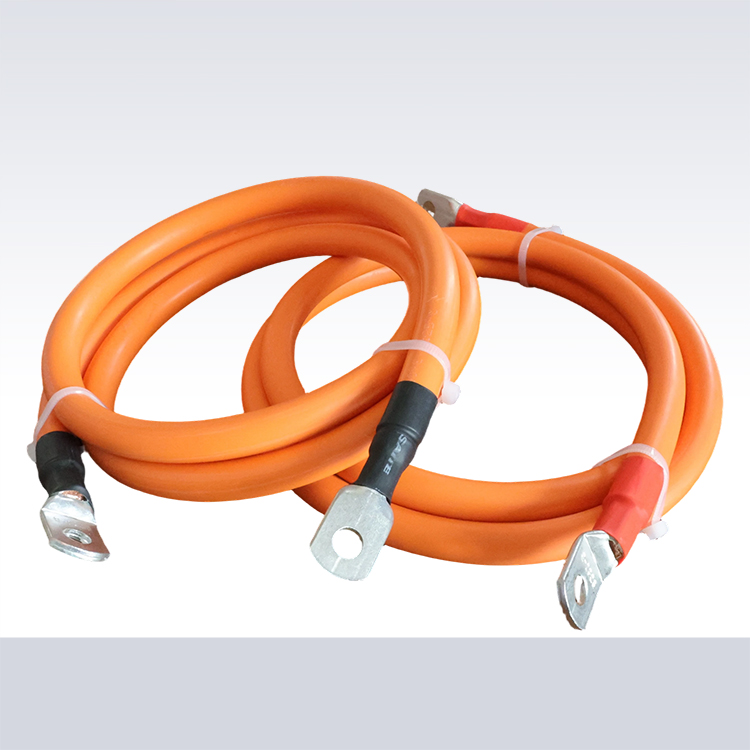
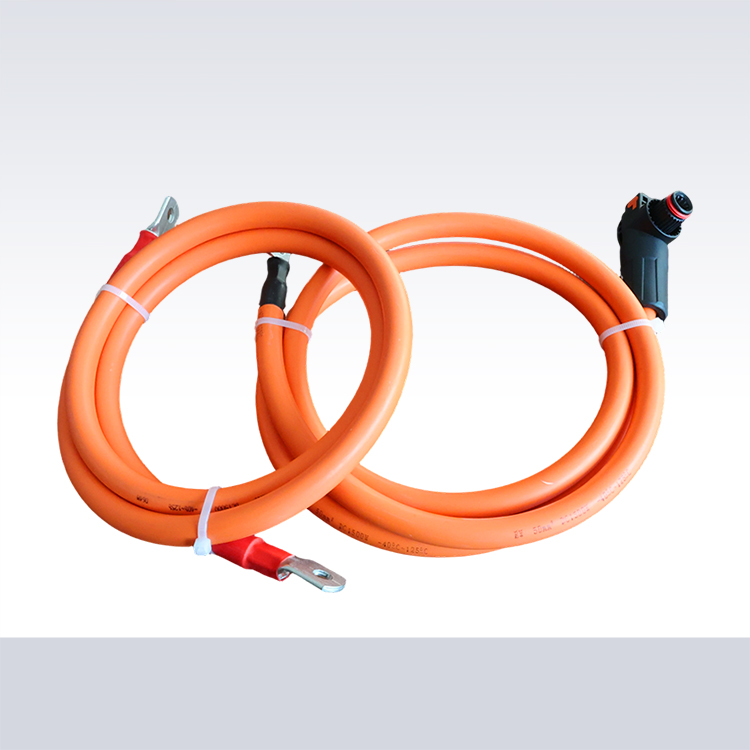
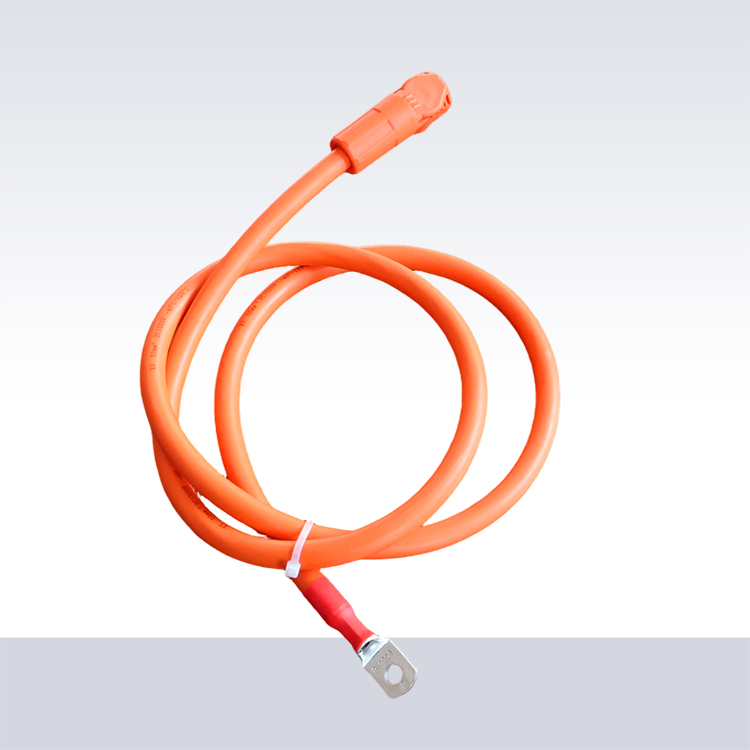
About the manufacturer: Hebei Haoshizai Cable Co., Ltd. produces TUV certified photovoltaic DC cable and solar cable — H1Z2Z2-K 1×4 mm² to 1×35 mm², H1Z2Z2-K 2×4 mm² and 2×6 mm², GF-EER23 2×4 mm² and 2×6 mm², plus 2.5 / 4 / 6 / 16 mm² single-core and 2×4 / 2×6 mm² constructions — together with new energy EV wiring in 16 / 25 / 35 / 50 / 70 mm². Multiple automated production lines, layer-by-layer quality inspection, standardised workshops and consolidated export delivery support both large-scale ground-mounted plants and distributed rooftop projects.






CONTACT
Email:525860526@qq.com
Whatsapp: +86 19933450664
TEL:+86 17803069333
WEB:https://www.haoshizai-solar.com
ADD:Dongyang Village, Daweihe Hui and Manchu Township, Wenan County, Langfang City, Hebei Province