


Current location: HOME > BLOGS > Frequently Asked Questions >
Precision Engineered Tinned Copper Solar Cable for Long Service Life PV Arrays
time:2026-10-11 11:03:31 author:haoshizai Click:117
Two solar cables can look identical on a drum and behave completely differently after ten years on a roof. The difference is engineered in, not printed on: conductor metallurgy, strand construction, cross-linking quality and wall thickness control. Precision in those four areas is what converts a cable into a 25-year asset.
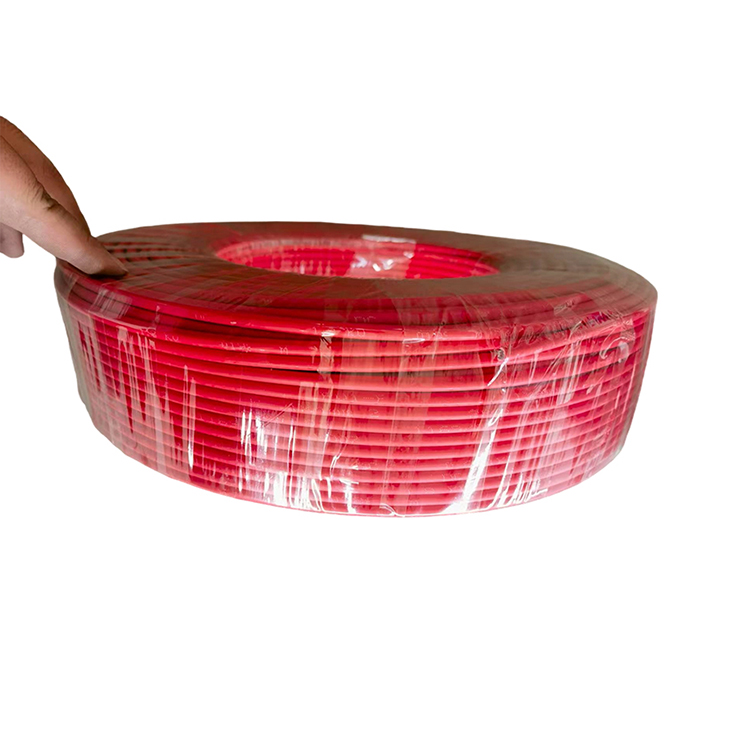
This article explains why tinned copper solar cable is the professional specification, how Class 5 stranding and cross-linked compounds work together, and which measurable parameters indicate that a photovoltaic cable has genuinely been engineered for long service life.
Why the Conductor is Tinned
Photovoltaic cable conductors are made from many fine copper strands. Untinned, those strands oxidise from the moment they are exposed at a cut end or inside a connector, and copper oxide is a poor conductor. Over years of thermal cycling the oxide layer grows, contact resistance rises, and the termination becomes a heat source.
Tinning - a thin layer of tin applied to each strand - stops that process. It keeps the copper bright, keeps contact resistance stable at MC4 style connectors, improves solderability during assembly and dramatically slows corrosion in coastal and high-humidity installations where salt-laden air attacks bare copper.
Prevents strand oxidation and rising contact resistance
Stabilises termination resistance through thermal cycling
Improves solderability in harness and junction box assembly
Resists salt-spray corrosion in coastal installations
Extends effective service life of every termination point
Class 5 Stranding: Flexibility Without Sacrificing Conductivity
A solid or coarse-stranded conductor is cheaper but impractical: solar cable must bend around rails, follow uneven roof lines and be pulled through duct. Class 5 flexible stranding per IEC 60228 uses many small wires so the cable bends repeatedly without work-hardening or cracking.
The engineering trade-off is that more strands mean more surface area and more inter-strand contact resistance, so strand quality and bunching consistency matter. Well-produced Class 5 conductor keeps DC resistance at or below the standard limit while remaining genuinely flexible in a cold morning installation.
Fine wire stranding for repeated bending without cracking
Measured DC resistance at or below IEC 60228 limits
Consistent bunching for reliable crimping
Round, compact conductor for uniform insulation wall
Good handling behaviour for installers working at height
Cross-Linking: the Process that Creates Heat Resistance
Standard thermoplastic insulation softens and flows when hot. Electron-beam cross-linking converts the polymer into a thermoset network, so the insulation and sheath retain mechanical strength at 90 °C continuous conductor temperature and survive short-circuit temperatures around 250 °C without melting.
This is not a cosmetic difference. On a hot roof, a non-cross-linked jacket will creep under clamp pressure, thin out at contact points and eventually expose the conductor. A properly cross-linked jacket holds its shape, resists abrasion and keeps its dielectric strength for the full design life.
Electron-beam cross-linked insulation and sheath
90 °C continuous conductor temperature capability
Short-circuit withstand around 250 °C
No melting or flow under clamp pressure at high temperature
Retained mechanical strength after heat ageing
Wall Thickness Control and Dielectric Integrity
Insulation performance depends on the thinnest point on the cable, not the average. Eccentric extrusion - where the conductor sits off-centre - creates a thin side that becomes the failure location years later, often after a surge or a mechanical knock.
Online thickness measurement and continuous spark testing during production are the controls that prevent this. Together they guarantee that every metre leaving the factory has full wall thickness and no pinholes, which is what makes a 25-year warranty meaningful rather than theoretical.
Online eccentricity and wall thickness monitoring
100 percent spark testing to catch pinholes
Verified dielectric strength at rated voltage
Uniform concentricity around the conductor
Retained production samples for batch traceability
Environmental Resistance: UV, Ozone, Hydrolysis and Cold Bend
A PV array exposes cable to every degradation mechanism at once: intense UV, atmospheric ozone, standing water, temperature swing from -40 °C winter nights to 90 °C summer conductor temperature, and in some sites ammonia from agricultural buildings.
The sheath compound is formulated against exactly that list, and the finished cable is tested for UV and ozone resistance, for behaviour after water immersion at elevated temperature, and for cold bend performance so that installers can work with it in winter without cracking the jacket.
UV stabilised sheath for permanent outdoor exposure
Ozone resistant compound for high-voltage DC environments
Hydrolysis resistance for wet and buried duct routes
Cold bend performance down to -40 °C
Resistance to ammonia and agricultural contaminants
How Hebei Haoshizai Cable Engineers Photovoltaic Cable
Hebei Haoshizai Cable Co., Ltd. combines standardised production workshops, modern extrusion and stranding equipment and mature process control to hold these parameters consistently across 2.5 mm², 4 mm², 6 mm², 10 mm² and 16 mm² single-core sizes and 2×6 mm² and 2×10 mm² twin constructions.
For buyers, the benefit is repeatability: the drum delivered next year behaves like the drum approved today, which is what allows installer training, stock planning and warranty terms to stay valid across a multi-year programme.
Tinned copper Class 5 conductor across the PV range
Cross-linked halogen-free insulation and sheath
Routine electrical and dimensional testing with batch records
Consistent jacket colour, printing and drum length
Engineering support on specification and installation questions
Frequently Asked Questions
What is the difference between tinned and bare copper solar cable?
Tinned copper has a thin tin coating on every strand that prevents oxidation, stabilises contact resistance at connectors and improves corrosion resistance in humid or coastal environments. Bare copper is cheaper but degrades faster at termination points.
What does Class 5 conductor mean?
Class 5 is the flexible stranding category in IEC 60228, using many fine wires so the cable can be bent and routed repeatedly without cracking while still meeting the standard DC resistance limit.
Why must solar cable insulation be cross-linked?
Cross-linking turns the polymer into a thermoset material that retains strength at 90 °C continuous conductor temperature and survives short-circuit temperatures near 250 °C, instead of softening and flowing like thermoplastic.
How long should photovoltaic cable last?
A correctly specified and installed H1Z2Z2-K style photovoltaic cable is designed for a service life comparable to the modules themselves, typically 25 years or more of outdoor exposure.
Can photovoltaic cable be buried in duct?
Yes, provided local code permits it and the route is protected from standing water and mechanical damage. Hydrolysis-resistant sheath compounds are used for such applications.
Do you supply twin core photovoltaic cable?
Yes. Alongside single-core sizes, 2×6 mm² and 2×10 mm² twin constructions are available for array and string wiring where a paired run is preferred.
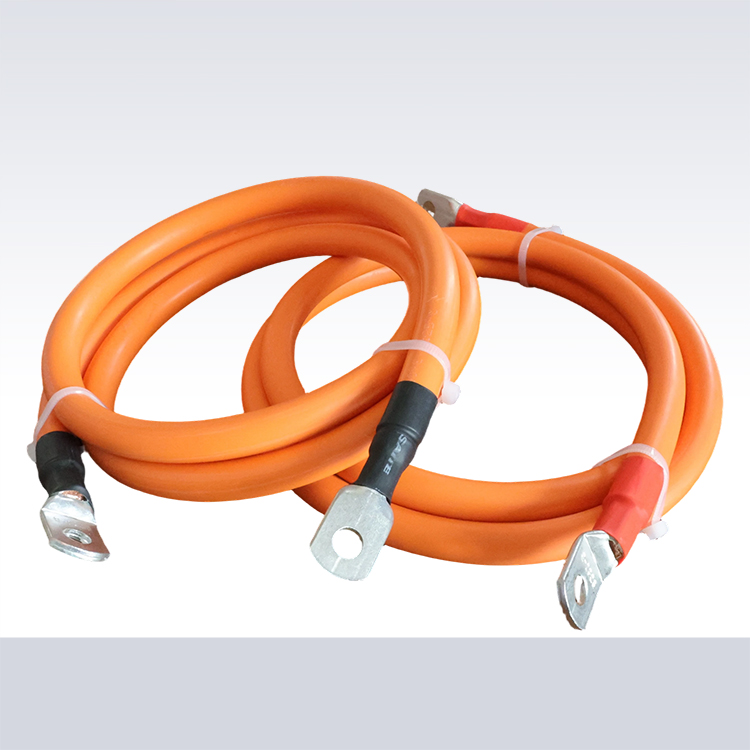
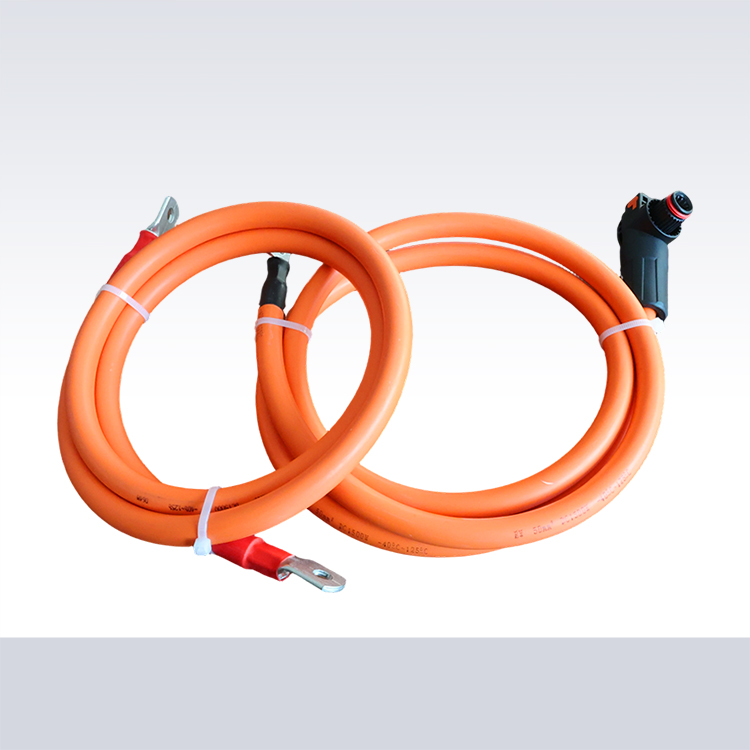
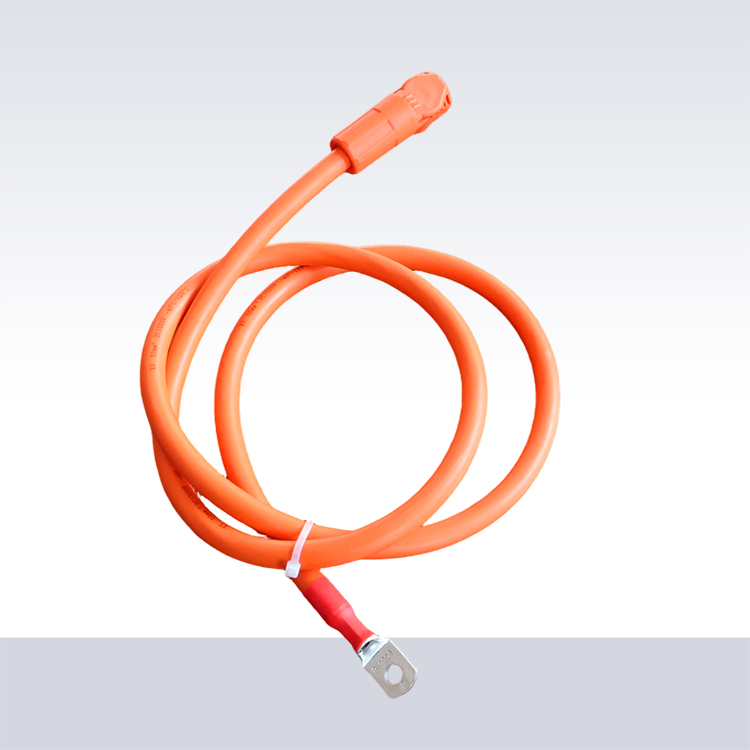
About the manufacturer: Hebei Haoshizai Cable Co., Ltd. produces TUV certified photovoltaic DC cable and solar cable — H1Z2Z2-K 1×4 mm² to 1×35 mm², H1Z2Z2-K 2×4 mm² and 2×6 mm², GF-EER23 2×4 mm² and 2×6 mm², plus 2.5 / 4 / 6 / 16 mm² single-core and 2×4 / 2×6 mm² constructions — together with new energy EV wiring in 16 / 25 / 35 / 50 / 70 mm². Multiple automated production lines, layer-by-layer quality inspection, standardised workshops and consolidated export delivery support both large-scale ground-mounted plants and distributed rooftop projects.






CONTACT
Email:525860526@qq.com
Whatsapp: +86 19933450664
TEL:+86 17803069333
WEB:https://www.haoshizai-solar.com
ADD:Dongyang Village, Daweihe Hui and Manchu Township, Wenan County, Langfang City, Hebei Province